











Our Blog

Advanced Troubleshooting: Common Symptoms of Faulty HVAC Sensors
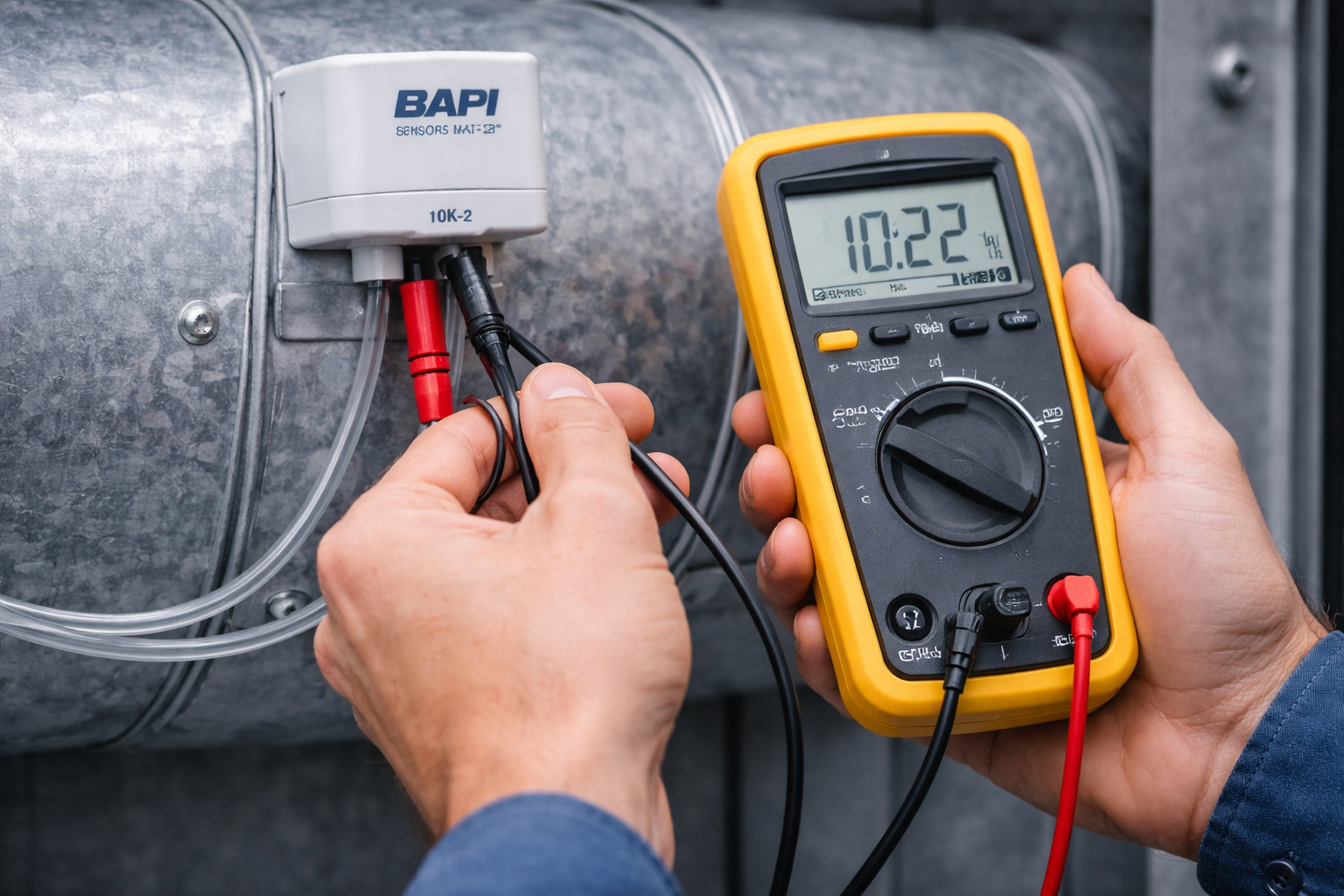
In a Building Management System (BMS), your mechanical plant is only as smart as the data it receives. If a chiller plant receives bad data from a faulty return water sensor, it will operate inefficiently—no matter how advanced the controller logic is.
When building occupants complain about stuffy rooms or freezing drafts, the mechanical equipment is often blamed first. However, the root cause is frequently sensor failure.
At Controls Traders, we supply premium Sensors & Transducers across Australia. Drawing on our 40 years of experience, here is an advanced troubleshooting guide to identifying the symptoms of faulty HVAC sensors.
Symptom 1: Massive Temperature Offsets (-40°C or +120°C)
If your BMS is suddenly reading an impossible temperature (like -40°C in an office or +120°C in a chilled water line), the issue is almost certainly electrical, not environmental.
The Cause:
- Open Circuit / Short Circuit: For standard 10k thermistors, an open circuit (a cut wire) will typically read at the extreme bottom of the controller's scale (e.g., -40°C). A short circuit (wires touching) will read at the absolute maximum.
- Sensor Type Mismatch: If a technician wires a 10k Type 3 sensor into a controller programmed to read a 10k Type 2 curve, the temperature offset will be severe. Always verify the thermistor curve matches the software configuration.
Symptom 2: Sluggish or "Hunting" Control Loops
If the room temperature swings wildly from hot to cold, or the chilled water supply temperature oscillates, the sensor may be suffering from thermal lag.
The Cause:
- Missing Thermal Paste: If a pipe immersion sensor is placed into a thermowell without thermal conductive paste, the air gap acts as an insulator. The water temperature changes, but the sensor takes 15 minutes to register it, causing the controller to overreact.
- Poor Placement: A Room Sensor mounted behind a bookshelf or a Duct Sensor placed in a dead-zone of the AHU will not see the airflow, resulting in sluggish response times.
Symptom 3: CO₂ and Humidity "Drift"
Unlike standard thermistors (which rarely drift), Indoor Air Quality (IAQ) sensors—like CO₂ and Humidity transducers—contain active sensing elements that can degrade or drift over time.
The Cause:
- Loss of Calibration: If the VAV box is pumping in 100% outside air but the room is empty, the CO₂ sensor has likely drifted upwards. High-quality sensors (like those from BAPI or Siemens) feature Automatic Background Calibration (ABC) to re-zero themselves based on overnight baseline levels. If a building is occupied 24/7, this ABC logic can fail, requiring manual calibration or replacement.
- Contamination: Humidity sensors placed in aggressive environments (like pools or outside air intakes) can suffer from chemical or moisture contamination on the sensing polymer, skewing the relative humidity reading permanently.
What to Do When a Sensor Fails
If a sensor has drifted beyond repair or suffered water ingress, it must be replaced to restore building efficiency.
Standardizing your site with reliable, high-quality sensors from reputable brands reduces the frequency of these service calls. Controls Traders warehouses a massive inventory of Sensors & Transducers locally in Adelaide.
Whether you need a replacement duct probe or a highly accurate room unit, we offer fast shipping Australia-wide. Call our support team on 1300 740 140 for cross-referencing and technical advice.
Frequently Asked Questions
How do I know if my HVAC temperature sensor has an open circuit or short circuit?
For a 10k thermistor, use a multimeter set to resistance (ohms). At room temperature (~25°C), a healthy 10k-2 sensor will read approximately 10,000 ohms. A reading of OL (overload/infinite resistance) indicates an open circuit — the wire or sensor element is broken. A reading of near 0 ohms indicates a short circuit — the wires are touching. Both faults produce extreme temperature readings on the BMS (typically -40°C or maximum scale).
What is Automatic Background Calibration (ABC) in CO₂ sensors?
ABC is a self-calibration feature in CO₂ sensors that assumes the lowest CO₂ reading recorded over a rolling period (typically 1–2 weeks) represents clean outdoor air (~400 ppm). The sensor uses this baseline to correct for drift. ABC works well in buildings that are regularly unoccupied overnight. However, in buildings occupied 24/7 — like hospitals or data centres — CO₂ never drops to baseline, and ABC logic will gradually drift the calibration upward, requiring manual recalibration or replacement.
Why does my room temperature sensor read correctly at times but drift at others?
Intermittent readings usually point to a loose connection or a partially broken wire that makes and breaks contact with vibration or temperature changes. Check terminal screws at both the sensor and controller ends first. If wiring checks out, the thermistor bead itself may have a hairline fracture — common in older sensors that have experienced physical shock — and the sensor will need replacing.
Can a humidity sensor be repaired after moisture or chemical contamination?
Generally no. Humidity sensors use a polymer film that absorbs and releases moisture to measure relative humidity. Chemical contamination or prolonged exposure to saturated air (RH > 95%) permanently alters the polymer, skewing the reading. Some manufacturers offer a bake-out recovery process for mild contamination, but in most cases, a contaminated humidity sensor must be replaced. Controls Traders stocks replacement room sensors with integrated humidity sensing for fast dispatch from Adelaide.
How often should HVAC sensors be recalibrated or replaced?
Standard thermistors (10k-2) rarely need recalibration and can last 15+ years if installed correctly. CO₂ sensors typically require recalibration every 2–3 years and replacement every 5–7 years depending on the environment. Humidity sensors in clean indoor environments can last 7–10 years, but those exposed to outdoor air, pool environments, or chemical fumes may need replacement every 2–3 years. Differential pressure sensors should be verified annually against a calibrated reference.
Read more
A Technical Guide to the Siemens RDF300 Room Sensor
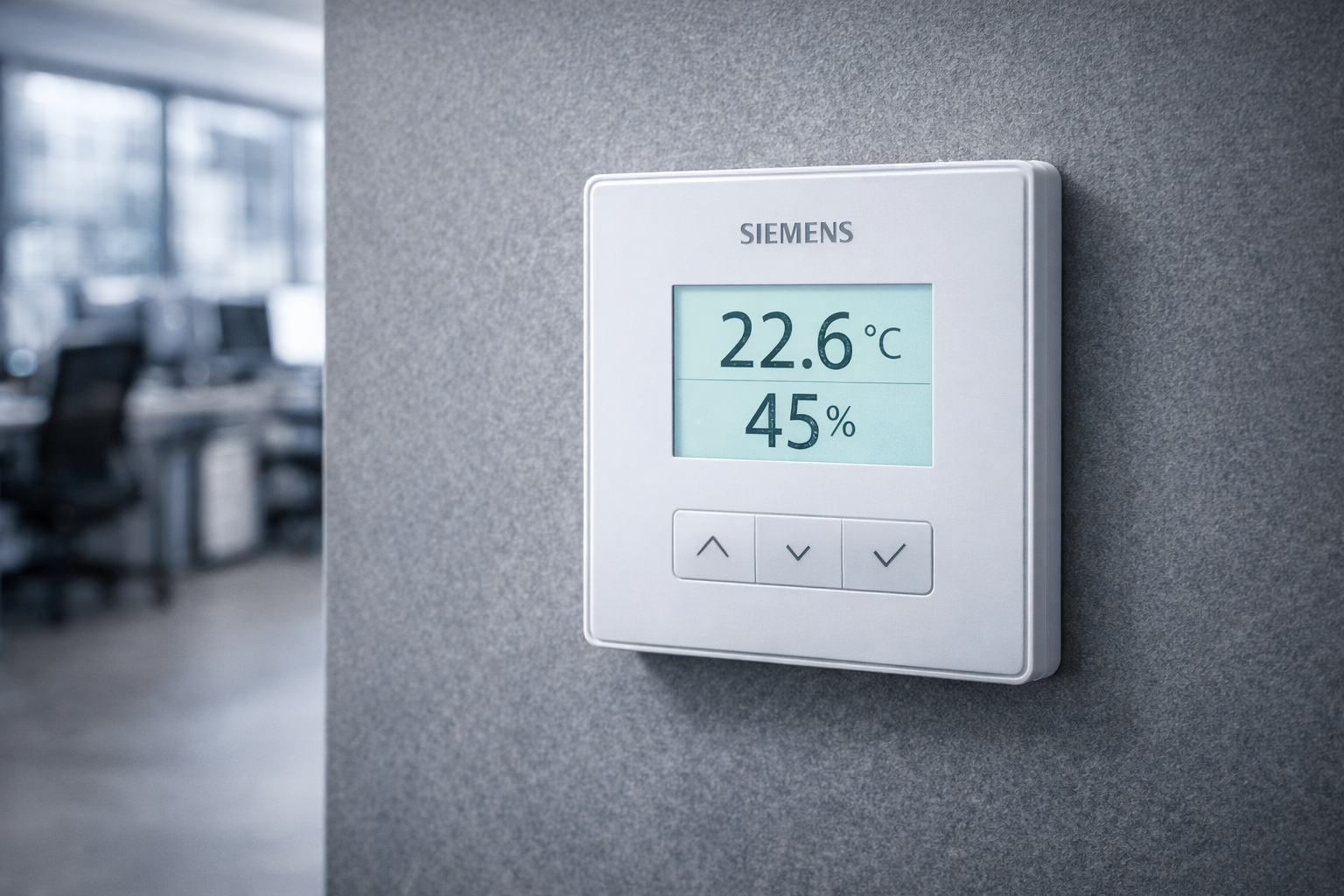
When it comes to commercial building automation, the room sensor is often the only piece of the HVAC system that the tenant actually sees. It needs to be accurate enough for the BMS to maintain tight control, yet aesthetically pleasing enough to satisfy architects.
The Siemens RDF300 has emerged as one of the most sought-after room units in the Australian market. It perfectly bridges the gap between industrial-grade reliability and modern commercial design.
As a trusted supplier of Siemens controls, Controls Traders offers this deep dive into why the RDF300 is a top choice for modern office fit-outs and VAV zone control.
Accuracy Meets Aesthetics
In premium office spaces, bulky, outdated thermostats are no longer acceptable. The Siemens RDF300 is a flush-mount room sensor designed to sit cleanly on the wall, providing a sleek, low-profile interface.
But beneath the modern exterior is highly sensitive sensing technology. The unit provides dual monitoring:
- Temperature: Providing the primary variable required for zone cooling and heating loops.
- Humidity: Essential for maintaining occupant comfort and preventing moisture issues in the building envelope.
By combining both temperature and humidity sensing into a single housing, installers reduce wall clutter and cut their cabling time in half.
Seamless BMS Integration
Siemens is renowned globally as an industrial powerhouse, and their field devices are built for seamless integration into high-level networks.
The data collected by the RDF300 doesn't just sit on the wall; it is fed back to your central controllers. Depending on the specific configuration of your DDC network, Siemens units utilize standard industry signals to communicate effortlessly with your existing BMS, ensuring that the plant room reacts instantly to the actual conditions inside the occupied space.
Application in Modern HVAC
The RDF300 is perfectly suited for dynamic building environments:
- VAV Zones: Providing rapid response to changing occupant loads in open-plan offices.
- Fan Coil Units (FCUs): Integrating with Valve Actuators to regulate chilled water flow precisely to the zone.
- Healthcare & Labs: Where strict humidity and temperature thresholds must be monitored constantly.
Available Now at Controls Traders
Whether you are standardizing a new multi-story build or replacing a drifting sensor in a legacy system, sourcing genuine Siemens hardware quickly is critical.
Controls Traders warehouses a massive inventory of Room Sensors, including the highly sought-after Siemens RDF300 series. Located in Adelaide, we bypass international supply chain delays, offering rapid, Australia-wide shipping to keep your projects on schedule.
Browse our full Siemens catalogue online or call our team on 1300 740 140 for project pricing.
Frequently Asked Questions
What does the Siemens RDF300 measure?
The Siemens RDF300 is a dual-function room sensor that measures both temperature and relative humidity simultaneously. It is designed as a flush-mount wall unit for commercial spaces, feeding both variables back to the BMS via standard industry signals for use in zone control, fan coil unit regulation, and humidity monitoring applications.
What BMS systems is the Siemens RDF300 compatible with?
The RDF300 uses standard analog output signals compatible with most major DDC controllers including Siemens, iSMA, Schneider, and EasyIO. The exact signal type (e.g. 0-10V, NTC thermistor) depends on the specific RDF300 variant — Controls Traders' technical team can advise on the correct model for your controller. Call 1300 740 140 for compatibility guidance.
Can the Siemens RDF300 be used for VAV zone control?
Yes — the RDF300 is specifically well-suited for VAV zone control in open-plan offices and meeting rooms. Its fast thermal response allows the BMS to react quickly to changing occupant loads, ensuring the VAV box modulates accurately to maintain setpoint.
Is the Siemens RDF300 suitable for healthcare or laboratory environments?
Yes. The dual temperature and humidity monitoring capability makes the RDF300 a strong choice for healthcare facilities and laboratories where strict environmental thresholds must be maintained continuously. For critical environments, always verify the specific accuracy and output specifications of the model against your project requirements.
Where can I buy genuine Siemens RDF300 sensors in Australia?
Controls Traders stocks genuine Siemens room sensors including the RDF300 series from our Adelaide warehouse, with fast Australia-wide delivery. Call 1300 740 140 or browse our Siemens catalogue online for current stock and project pricing.
Read more
How HVAC Flow Meters Improve Chilled Water System Efficiency
You cannot optimize what you cannot measure. For facility managers and HVAC engineers operating large chilled water plants, true energy efficiency goes beyond simply installing a Variable Speed Drive (VSD) or upgrading a chiller. To achieve maximum efficiency and maintain a high Delta T (ΔT), you need real-time data on exactly how much water is moving through your system.
This is where accurate HVAC flow meters become the most valuable diagnostic tools in your plant room.
At Controls Traders, based in Adelaide, we supply a wide range of Flow Meters designed to provide your Building Management System (BMS) with the precise data needed to unlock hidden energy savings.
The Cost of "Blind" Pumping
In many older variable-flow systems, the BMS relies solely on temperature sensors and pressure transducers to control pump speeds. While this provides a baseline of control, it doesn't give the complete picture. Without measuring the actual fluid flow in Litres per second (L/s), your system can easily fall victim to "ghost flows" and over-pumping.
Over-pumping pushes water through the cooling coils too quickly, meaning the water doesn't have time to absorb heat from the building. This results in "Low ΔT Syndrome," forcing your chillers to work harder and drastically reducing plant efficiency.
Types of HVAC Flow Meters
To combat this, integrators use flow meters to measure and calculate thermal energy. Depending on the application and whether you are dealing with a new build or a retrofit, there are two primary technologies:
1. Mechanical Flow Meters Traditional in-line mechanical flow meters use turbines or impellers. They are highly reliable and cost-effective for standard chilled and heating water applications. However, they must be cut directly into the pipework, which requires draining the system—making them better suited for new installations.
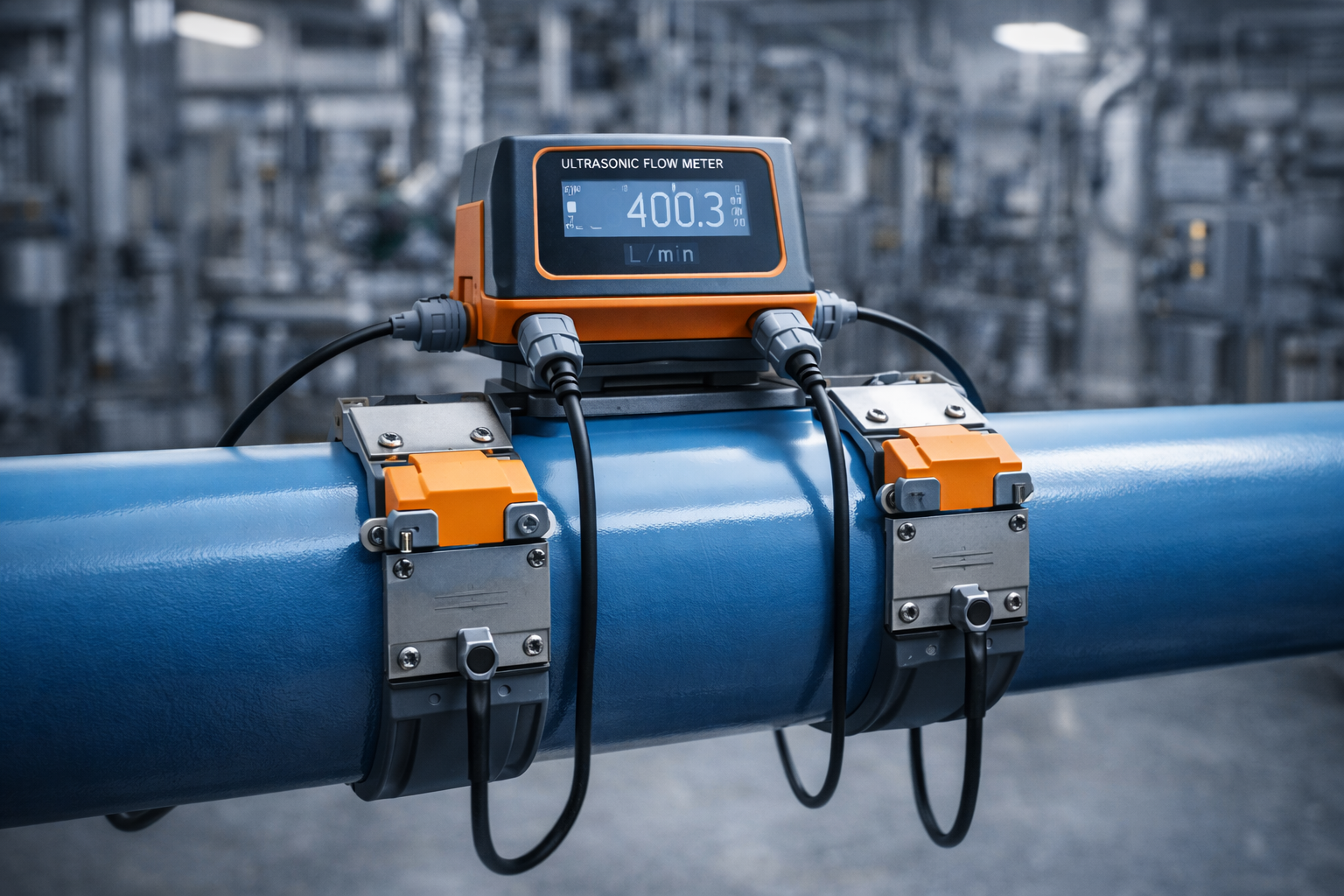
2. Ultrasonic Flow Meters For retrofits and critical systems where shutting down the plant isn't an option, ultrasonic flow meters are the gold standard. These meters clamp onto the outside of the pipe and use sound waves to measure fluid velocity. They are non-invasive, meaning zero pressure drop, zero risk of leaks, and no system downtime during installation.
Integration with the BMS
Modern flow meters do more than just display numbers on a local screen. They feature analog or digital outputs that integrate directly with your BMS. By combining the flow rate from the meter with supply and return temperature data, your controller can calculate the exact thermal energy (kWh) being consumed by the building.
This data can be used to:
- Identify underperforming cooling coils.
- Validate the performance of Pressure Independent Control Valves (PICVs).
- Accurately bill individual tenants for their specific chilled water usage.
Source Your Flow Meters Locally
If you are upgrading a plant room or need to replace a faulty meter, waiting weeks for international freight can stall your handover. Controls Traders warehouses a complete range of Flow Meters for both chilled and heating water applications locally in Adelaide, ready for fast Australia-wide delivery.
Need help selecting between mechanical and ultrasonic options? Contact our technical team today on 1300 740 140.
Frequently Asked Questions
What is Low Delta T Syndrome and how do flow meters help?
Low Delta T Syndrome occurs when chilled water returns to the chiller at nearly the same temperature it left — meaning the building's cooling coils are not extracting enough heat from the water. This forces chillers to run longer and harder, dramatically increasing energy costs. Flow meters allow the BMS to calculate the actual thermal energy being transferred (kWh), identify which coils are underperforming, and give operators the data they need to correct valve sizing or control logic.
What is the difference between a mechanical and an ultrasonic flow meter?
Mechanical flow meters use a turbine or impeller inside the pipe to measure flow and must be cut directly into the pipework. They are cost-effective and reliable for new installations. Ultrasonic flow meters clamp onto the outside of the pipe using sound waves to measure fluid velocity — no cutting, no draining, no system downtime. For retrofits on live systems, ultrasonic is almost always the preferred choice.
Can a flow meter integrate with a BMS?
Yes — modern flow meters feature analog outputs (typically 4-20mA or 0-10V) or digital communication ports (Modbus, BACnet) that connect directly to your DDC controller. By pairing the flow rate with supply and return temperature data from your pipe sensors, the BMS can calculate real-time thermal energy consumption in kWh, which is essential for tenant submetering and chiller plant optimisation.
How do I size a flow meter for a chilled water system?
The key parameters are pipe diameter, fluid type (water, glycol mix), expected flow rate range (L/s or m³/h), and operating pressure and temperature. For ultrasonic clamp-on meters, you also need to know the pipe material and wall thickness. Controls Traders' technical team can assist with sizing — call 1300 740 140 with your pipe specifications.
Do I need a flow meter if I already have a PICV installed?
A PICV controls flow at the terminal unit level, but it does not give you system-wide flow data. A flow meter on the main chilled water header or individual risers provides the macro-level picture — how much total water is moving through the plant — which is essential for chiller staging, energy submetering, and diagnosing overall system health.
Read more
Common HVAC Sensor Types Explained
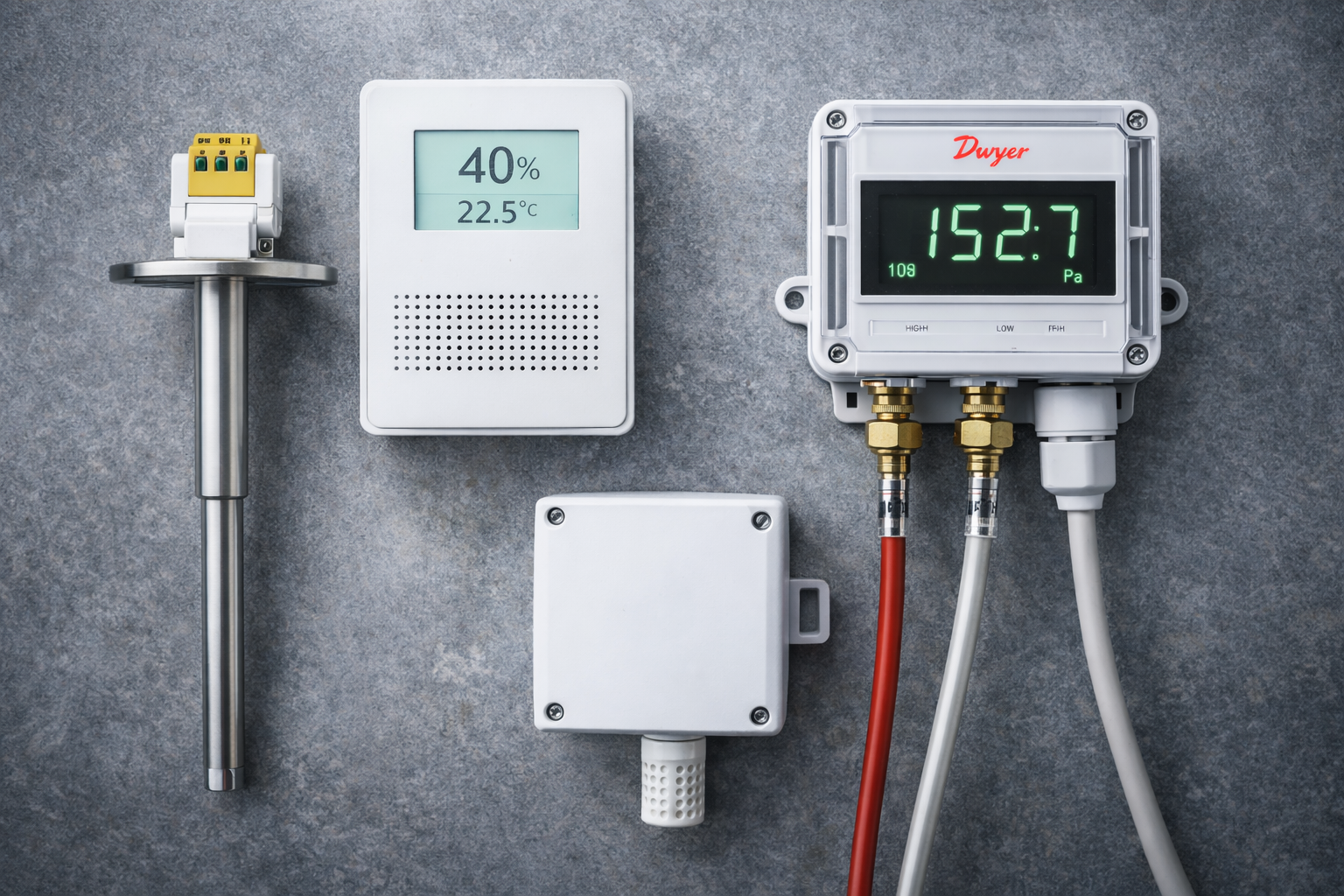
In any Building Management System (BMS), the controller acts as the brain, but the sensors serve as the vital nervous system. Regardless of how advanced your digital controls are, they cannot maintain occupant comfort or optimize energy efficiency if they receive inaccurate data from the field.
At Controls Traders, based in Adelaide, South Australia, we have over 40 years of industry experience supplying high-quality Sensors & Transducers. To help facility managers and HVAC technicians navigate system upgrades, here is our technical breakdown of the most common HVAC sensor types and their applications.
1. Temperature Sensors
Temperature sensors are the primary variable for roughly 90% of HVAC control loops. Most standard BMS applications utilize Thermistors (such as 10k Type 2 or 10k Type 3), which are cost-effective and highly sensitive to temperature changes. For critical process control, central plant supplies, or thermal energy calculation, RTDs (like PT100 or PT1000) are used because they offer extreme stability and linear accuracy.
Depending on where you are measuring the temperature, you will need a specific form factor:
- Room Sensors: These aesthetic, wall-mounted units provide fast responses to occupant loads in office VAV zones.
- Duct Sensors: Available as rigid probes for small ducts or flexible averaging elements for large AHU mixed-air plenums. Averaging sensors are critical in AHUs to prevent the BMS from reacting to isolated streaks of cold outside air.
- Pipe Sensors: Immersion sensors sit inside a stainless steel or brass thermowell directly in the water flow, providing the highly accurate readings required for chiller supplies. Strap-on variants are also available for retrofits where the system cannot be drained.
- Outside Sensors: Built with weatherproof enclosures and sun-shields to ensure solar radiation does not artificially inflate the ambient air reading.
2. Indoor Air Quality (IAQ): CO₂ and Humidity Sensors
Modern HVAC design relies heavily on Demand Control Ventilation (DCV), where outside air intake is strictly matched to building occupancy.
- CO₂ Sensors: By measuring carbon dioxide levels, these sensors tell the BMS exactly how many people are in a room. If a meeting room is empty, the BMS signals the system to reduce fresh air intake, saving significant energy on conditioning outside air. For accurate readings, CO₂ sensors must always be installed at breathing-zone height (1.2m–1.5m) and kept away from supply air diffusers.
- Humidity Sensors: Proper humidity control is critical for occupant comfort and preventing mold in commercial spaces. Today, humidity sensing is often conveniently combined with temperature and CO₂ monitoring in a single multi-function room unit, such as those manufactured by Siemens or BAPI.
3. Differential Pressure (DP) Sensors
A Differential Pressure Transducer measures the difference in pressure between two distinct points (a high side and a low side) and converts that mechanical difference into an electrical signal (like 0-10V) for the BMS.
DP sensors generally fall into two categories:
- Air DP Sensors (Dry Media): Essential for airside operations, these measure in Pascals (Pa). They are used for filter monitoring (triggering a "Dirty Filter" alarm as pressure drops across a clogged filter bank), monitoring duct static pressure to tell Variable Speed Drives (VSDs) to speed up or slow down, and ensuring safe building pressurization in stairwells.
- Liquid DP Sensors (Wet Media): These measure pressure drops across pumps, chillers, and valves, typically reading in kPa or Bar. They are crucial for maintaining proper hydraulic stability in chilled water and heating water loops.
Sourcing the Right Sensors in Australia
Using an incorrect sensor type or suffering from poor placement can lead to system "hunting," massive energy waste, and uncomfortable tenants.
If you need to replace a drifting sensor or specify parts for a new digital controls upgrade, Controls Traders stocks a comprehensive range of sensors from industry-leading brands, including BAPI, Siemens, Automated Components Inc (ACI), and Dwyer.
We warehouse our inventory locally in Adelaide, ensuring that you don't have to wait weeks for international freight. Browse our full range of Sensors & Transducers online or call our technical support team on 1300 740 140 for expert selection advice and fast, Australia-wide delivery.
Frequently Asked Questions
What is the most common type of temperature sensor used in HVAC?
The 10k Type 2 (10k-2) thermistor is the most widely used temperature sensor in commercial HVAC and BMS applications. It is cost-effective, highly sensitive, and natively supported by almost every major DDC controller brand including iSMA, Siemens, Schneider, and EasyIO. Controls Traders stocks a full range of 10k-2 sensors from BAPI and ACI for same-day dispatch from Adelaide.
What is the difference between a thermistor and an RTD?
A thermistor (like the 10k-2) is highly sensitive and inexpensive, making it ideal for standard zone control in offices and AHUs. An RTD (Resistance Temperature Detector), such as a PT100 or PT1000, is more accurate and stable across a wide temperature range, making it better suited for critical applications like chiller supply monitoring or thermal energy metering. RTDs cost more but are essential where precise measurement is non-negotiable.
Where should a CO₂ sensor be installed in a room?
CO₂ sensors must be installed at breathing-zone height — between 1.2m and 1.5m above floor level — and positioned away from supply air diffusers. Placing a sensor directly under a diffuser will cause it to read artificially low CO₂ levels (because it is sampling diluted supply air), tricking the BMS into thinking the room is empty and reducing fresh air intake when it should not.
What is the difference between a room sensor and a duct sensor?
A room sensor is a wall-mounted unit that measures the ambient conditions in the occupied space — it is designed for airflow exposure and fast response to occupant heat loads. A duct sensor is a probe mounted inside the ductwork to measure supply air, return air, or mixed air temperatures. Averaging duct sensors are used in large AHU plenums where a single-point probe would not capture a representative reading across the full duct cross-section.
What causes a differential pressure sensor to give incorrect readings?
The most common causes are: incorrect port connection (high and low ports swapped), blocked or kinked pneumatic tubing, the sensor being mounted in a location exposed to vibration, or selecting a sensor with the wrong pressure range for the application. For filter monitoring, a 0–250 Pa range sensor is typically correct. For duct static pressure, a 0–500 Pa or 0–1000 Pa range is usually more appropriate depending on the system design.
Read more
BACnet vs Modbus: Which Protocol Is Best for HVAC Controls?
 In the world of Building Management Systems (BMS) and HVAC integration, reliable communication between your controllers, sensors, and actuators is the backbone of an efficient plant room. For integrators and facility managers, choosing the right open communication protocol for Direct Digital Control (DDC) units is a critical decision.
The two undisputed heavyweights in building automation are BACnet and Modbus.
While both protocols allow controllers and end devices to "talk" to one another on a network, they were designed in different eras and for different primary purposes. At Controls Traders, we supply premium hardware that speaks both languages natively, including iSMA, Siemens, and Schneider controllers.
Here is our technical guide to understanding BACnet and Modbus, and how to choose the right protocol for your next HVAC integration.
What is BACnet?
BACnet (Building Automation and Control networks) was purpose-built for the building automation industry. It is designed specifically to handle the complex, hierarchical data requirements of modern HVAC, lighting, and security systems.
In HVAC applications, you will most commonly encounter BACnet MS/TP (Master-Slave/Token-Passing), which runs on the RS-485 physical layer and connects devices in a daisy-chain topology.
- How it works: A token is passed between controllers; only the device currently holding the token is permitted to transmit data.
- The Gear: BACnet is the native language for most of the premium BMS controllers we stock, including iSMA, EasyIO, and Siemens. Furthermore, intelligent field devices like Belimo Actuators now frequently come with BACnet MS/TP built-in for seamless integration.
- The Advantages: BACnet provides real-time speed, high reliability, and a rich, object-oriented data structure that makes discovering and mapping complex network points incredibly efficient.
What is Modbus?
Modbus is the older of the two protocols, originally developed for industrial automation and Programmable Logic Controllers (PLCs). Despite its age, it remains fiercely relevant due to its simplicity, robustness, and universal acceptance.
Like BACnet, it often runs over an RS-485 serial connection (known as Modbus RTU) or over Ethernet (Modbus TCP/IP).
- How it works: Modbus uses a strict Master/Slave architecture. A single Master device requests data or sends commands, and the Slave devices (like sensors or drives) simply listen and respond.
- The Gear: Many heavy-duty industrial components, variable speed drives (VSDs), and energy meters rely heavily on Modbus RTU.
- The Advantages: It is lightweight, remarkably easy to troubleshoot, and requires very little processing power from the end devices.
Head-to-Head Comparison
When deciding which protocol to standardize on for a new site or retrofit, system integrators should consider the following differences:
1. Data Structure and Discoverability
- BACnet: Uses an "object-oriented" structure. A BACnet controller doesn't just send a raw number; it sends an object (like an Analog Input) complete with metadata, such as engineering units (°C or Pa), status flags, and descriptions. BACnet devices are also "discoverable," meaning a BMS supervisor can scan the network and automatically pull in all available points.
- Modbus: Uses a register-based structure. It transmits raw data values (e.g., a 16-bit integer). The BMS must be manually programmed with a register map provided by the manufacturer to understand that "Register 40001" equals "Supply Air Temperature."
2. Network Speed and Complexity
- BACnet: Because of token-passing and high bandwidth capabilities, BACnet is ideal for executing rapid, complex logic like PID loops across multiple devices.
- Modbus: Excellent for simple, repetitive polling of data. However, because the Master must individually poll every Slave, a network with hundreds of Modbus devices can suffer from high latency.
3. Application Focus
- BACnet: Best suited for high-level control applications—such as modulating actuators, VSDs, and coordinating complex plant room strategies.
- Modbus: Ideal for simple equipment integrations, such as reading electrical meters, basic PLCs, or polling simple field sensors.
Bridging the Gap in Modern HVAC
Fortunately, you rarely have to choose just one. Modern HVAC systems are inherently hybrid.
For instance, you might use a powerful **Siemens or iSMA** controller acting as a BACnet router to manage the high-level logic of your plant room. That same controller can utilize a secondary RS-485 port to poll a daisy-chain of Modbus RTU electrical meters, seamlessly translating that Modbus data into BACnet objects for the main BMS supervisor to read.
Even field-level devices have adapted to this dual reality. Premium hardware, such as Belimo actuators, are designed to be plug-and-play with major building management systems, offering native compatibility with BACnet, Modbus RTU, and Modbus TCP/IP straight out of the box. This ensures faster commissioning and dramatically reduces the hassle of integrating third-party controls.
Need Help Selecting Your BMS Hardware?
Whether you are pulling MS/TP cable for a network of BACnet controllers or integrating legacy Modbus RTU field devices into a new digital BMS, selecting the right hardware is essential.
Controls Traders is an Australian-owned supplier located in Stepney, Adelaide. We warehouse a massive inventory of DDC controllers, gateways, and smart actuators from globally trusted brands like Belimo, Siemens, Schneider, and Honeywell.
We offer fast, reliable delivery anywhere, Australia-wide.
Ready to upgrade your control network? Request a quote online or call our technical team today on 1300 740 140 to discuss your protocol integration needs
Read more
A Guide to HVAC Control Systems for Facility Managers
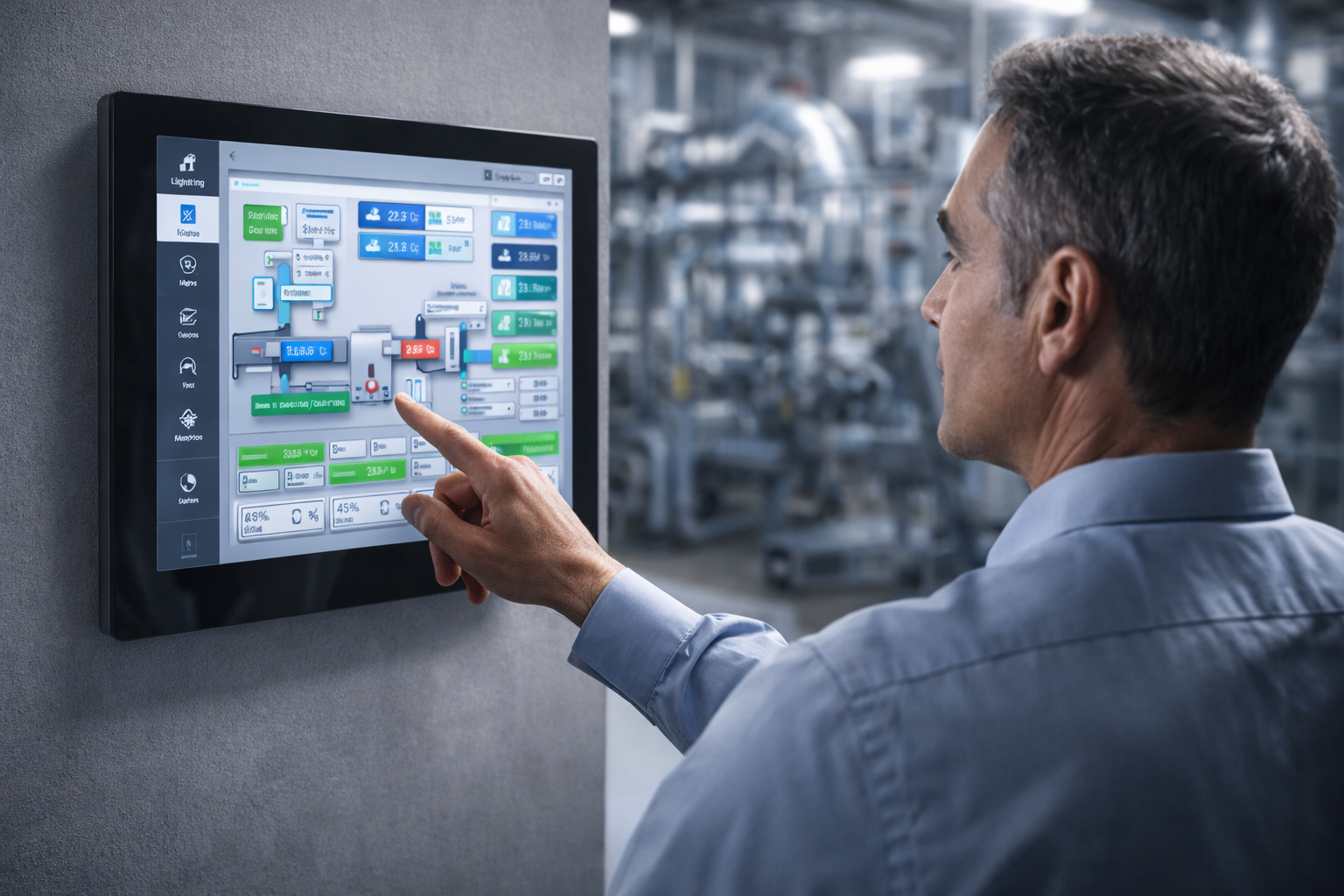
If you are managing a commercial building in Australia, you know that HVAC consumption typically accounts for 40–50% of your total electricity bill. For facility managers, ensuring that these systems run efficiently is critical for both occupant comfort and the bottom line.
A modern HVAC control system—often integrated into a broader Building Management System (BMS) or Building Automation System (BAS)—is the digital intelligence that runs your facility. It automates the flow of air and water, allowing your building to react to real-time demands rather than relying on manual adjustments.
At Controls Traders, we have over 40 years of industry experience supplying high-quality building automation controls across Australia. Whether you are looking to understand your current setup or planning an upgrade, here is your essential guide to how an HVAC control system works.
The Core Components of an HVAC Control System
An effective control system can be broken down into three main categories: the brain, the nervous system, and the muscles.
1. The Brains: Controllers and Thermostats
The controllers are the digital intelligence of your HVAC system. They receive data from the building, process it through programmed logic (like PID loops), and send commands to the mechanical equipment.
- Stand-alone Controllers: Ideal for local control of individual zones or small equipment.
- BMS Controllers: For large facilities, Direct Digital Control (DDC) units connect via open communication protocols like BACnet or Modbus. This allows all equipment to be monitored and managed from a central supervisor or touch screen. We supply highly capable controllers from brands like iSMA, Siemens, and Schneider.
2. The Nervous System: Sensors
No matter how advanced your controller is, it cannot maintain efficiency if it receives inaccurate data. Sensors measure the physical environment and feed this data back to the BMS.
- Temperature Sensors: Used in rooms, ducts, and pipes to ensure cooling and heating targets are met.
- CO₂ and Indoor Air Quality Sensors: Critical for Demand Control Ventilation (DCV). By monitoring CO₂ at the breathing zone height, the BMS knows exactly how many occupants are in a room and adjusts fresh air intake accordingly, saving energy when rooms are empty.
- Differential Pressure Sensors: These measure pressure drops across filters (triggering "dirty filter" alarms) or monitor static pressure in ducts to control fan speeds.
3. The Muscles: Actuators and Valves
Once the controller makes a decision, it needs a physical mechanism to execute it. This is where Actuators and Valvescome in.
- Valve Actuators: These are electric motors that open, close, or modulate valves to control the flow of chilled or hot water through the building.
- Damper Actuators: These regulate the flow of air through ductwork and Air Handling Units (AHUs).
- Pressure-Independent Control Valves (PICVs): A major upgrade for variable flow systems, PICVs mechanically absorb pressure fluctuations to prevent over-pumping and "Low Delta T Syndrome," ensuring optimal chiller efficiency. We stock a massive range of premium actuators and valves from Belimo and Siemens.
4. The Efficiency Drivers: Variable Speed Drives (VSDs)
Older HVAC systems ran fans and pumps at 100% full speed constantly, wasting immense amounts of power. Variable Speed Drives (VSDs) act as a "dimmer switch" for your heavy motors. By slowing a fan down by just 20% to match the actual airflow demand, a VSD can reduce the fan's electricity consumption by roughly 50%.
Protecting Your Investment
Facility managers know that "uptime" is everything. Your control panels contain sensitive electronics that are highly susceptible to "dirty power" and momentary voltage sags. Integrating Industrial UPS Systems into your mechanical switchboards ensures that your BMS controllers, network hardware, and field power supplies stay online during power blips, preventing data corruption and plant room blindness.
Frequently Asked Questions (FAQs)
What is the difference between a stand-alone controller and a BMS controller? A stand-alone controller provides local control for a specific piece of equipment or zone, whereas a BMS controller integrates into a larger network (often using BACnet or Modbus) to allow centralized monitoring, logging, and remote tuning of the entire building.
How can I improve my existing HVAC energy efficiency? The fastest ways to improve efficiency are upgrading to Variable Speed Drives (VSDs) to reduce fan/pump speeds at partial loads, and installing Pressure-Independent Control Valves (PICVs) to prevent chilled water overflow. Additionally, ensuring your CO₂ sensors are correctly placed allows for intelligent Demand Control Ventilation.
Where can I buy HVAC control parts in Australia? Controls Traders is an Australian-owned business based in Stepney, South Australia. We warehouse a massive inventory of trusted global brands—including Belimo, Siemens, Schneider, and Honeywell—and offer fast delivery anywhere across Australia.
What is a Building Management System (BMS) and do I need one? A Building Management System (BMS) — also called a Building Automation System (BAS) — is a centralised software platform that connects and monitors all of your HVAC controllers, sensors, and actuators from a single interface. For buildings with multiple zones, AHUs, or chillers, a BMS is strongly recommended. It enables energy reporting, remote fault detection, scheduled setpoints, and trend logging — all of which are difficult or impossible to manage manually across multiple stand-alone controllers.
How do I know if my HVAC sensors need replacing? Common signs of a failing HVAC sensor include: rooms that are consistently over- or under-cooled despite correct setpoints, BMS alarms flagging out-of-range readings, or sensor values that do not change even when conditions clearly have. Temperature sensors can drift over time, and CO₂ sensors typically require recalibration or replacement every 5–7 years. Controls Traders stocks replacement sensors from Belimo, Siemens, and BAPI for fast Australia-wide delivery.
What is Demand Control Ventilation (DCV) and how does it save energy? Demand Control Ventilation (DCV) uses CO₂ sensors placed at breathing zone height to measure actual occupancy in a space. When CO₂ levels are low — indicating fewer occupants — the BMS reduces fresh air intake to only what is needed. This prevents over-ventilating empty rooms, which is one of the most common sources of wasted HVAC energy in commercial buildings. DCV is particularly effective in spaces with variable occupancy such as conference rooms, open-plan offices, and function centres.
What is the lifespan of an HVAC actuator? Most quality HVAC actuators from brands like Belimo and Siemens are rated for 60,000 operating cycles or more, which in a typical commercial HVAC application translates to 10–15 years of service life. Actuators in high-cycle applications — such as modulating valves on chilled water coils — may wear sooner. Signs of a failing actuator include hunting (constantly adjusting without settling), failure to reach setpoint, or a seized shaft. Controls Traders stocks a full range of direct-replacement Belimo and Siemens actuators ready for same-day dispatch from Adelaide.
Need to replace a faulty part or upgrade your facility's controls? With over 40 years of combined HVAC and automation expertise, our team is ready to help. Request a quote online or call us today on 1300 740 140

Top 5 Belimo Products for Australian HVAC Installers
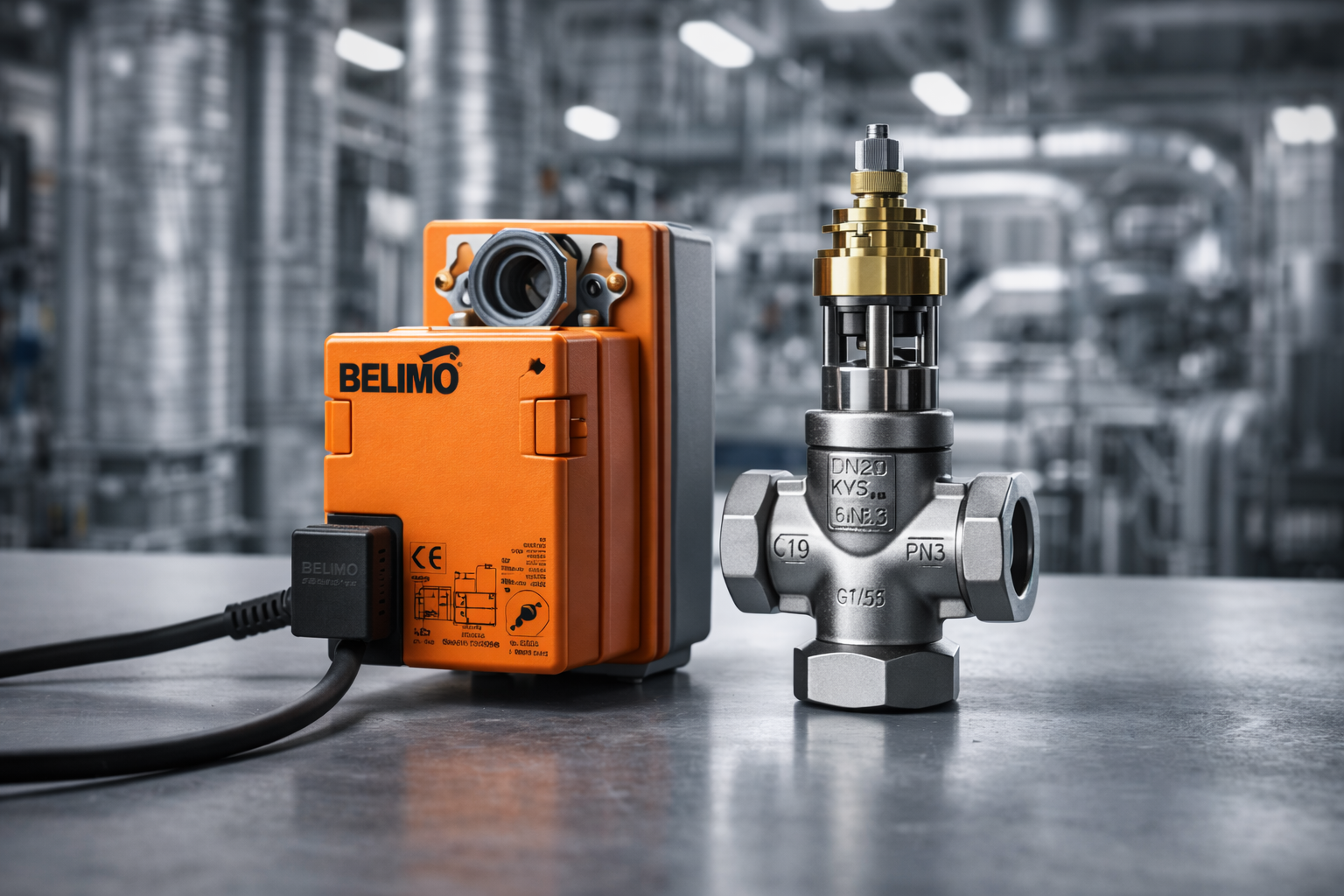
For Australian HVAC installers and facility managers, Belimo is synonymous with reliability. Whether you are fitting out a new commercial tower in Sydney or retrofitting a hospital plant room in Adelaide, you know that a Belimo orange actuator simply works.
However, the Belimo range is vast. Beyond the standard damper actuators, there are high-tech valves and safety solutions that can drastically reduce commissioning time and energy usage.
At Controls Traders, we warehouse a massive range of Belimo stock in South Australia, ready for fast delivery nationwide. Drawing on our 40 years of industry experience, here are the Top 5 Belimo products that every Australian installer should know about.
1. Belimo LF Series (Spring Return Damper Actuator)
Safety is non-negotiable in Australian building codes. The Belimo LF Series is a staple for critical applications where a fail-safe position is required during a power outage.
- Specs: 4Nm torque, Spring Return, available in 24V or 240V options.
- Typical Application: Outside air dampers, fire/smoke isolation dampers, and freeze protection strategies.
- Why Installers Love It: It provides instant mechanical fail-safe reliability. If power is cut, the spring drives the damper fully closed (or open) within seconds.
- Availability: We stock the BEL-DAM-LF series ready for dispatch.
2. Belimo NR24A-SR (Rotary Damper Actuator)
When you need precise modulation for standard air handling, the NR Series is the industry workhorse. It is robust, easy to mount, and integrates seamlessly with almost any BMS.
- Specs: 10Nm torque, 24V AC/DC, Modulating (0-10V or 4-20mA control).
- Typical Application: Regulating airflow in Air Handling Units (AHUs) and large VAV zones.
- Why Installers Love It: It features a manual override button and a universal clamp that fits easily onto existing damper jackshafts. The 10Nm torque is the "Goldilocks" size—perfect for most mid-sized commercial dampers.
3. Belimo Energy Valve™
This is the future of hydronic control. The Energy Valve is not just a valve; it is a 5-in-1 device combining a valve, actuator, flow sensor, and two temperature sensors.
- Specs: Measures Flow (L/min), Power (kW), and Energy (kWh), plus Supply/Return temperatures.
- Typical Application: Green Star rated buildings, university campuses, and sites requiring precise energy metering and "Delta T" management.
- Why Installers Love It: It solves "Low Delta T" syndrome automatically. The valve logic monitors coil performance and modulates to ensure the water absorbs heat efficiently, preventing chiller over-pumping.
4. Belimo Pressure Independent Control Valve (PICV)
In variable flow systems, pressure fluctuations can cause "ghost flows" and hunting. The Belimo PICV combines a differential pressure regulator with a control valve to maintain constant flow regardless of pressure changes.
- Specs: Dynamic balancing with tight close-off pressure. Available in various flow ranges (Kv).
- Typical Application: Fan Coil Units (FCUs) and chilled beams in multi-story office buildings.
- Why Installers Love It: It simplifies commissioning. You don't need to balance the system iteratively; you just set the maximum flow dial on the valve, and the internal regulator handles the rest.
5. Belimo Characterised Control Valve (CCV)
Standard ball valves often have poor flow characteristics (a small opening lets through too much water). Belimo CCVs feature a specialized disc inside the ball port that ensures an "equal percentage" flow curve.
- Specs: High close-off pressure, zero leakage, and a self-cleaning ball design.
- Typical Application: Heating and cooling coils where precise temperature stability is required.
- Why Installers Love It: They eliminate the "hunting" common with cheap ball valves. The precise control disc ensures that a 10% opening equals 10% thermal output, making PID loop tuning much easier for the controls technician.
Summary
Whether you need the basic reliability of an NR24A-SR damper actuator or the advanced data analytics of an Energy Valve, choosing Belimo ensures you aren't returning to the site to replace failed gear in six months.
At Controls Traders, we are an Australian-owned business with deep stock levels of Belimo Actuators and valves in our Adelaide warehouse. We understand the local market and can help you cross-reference old part numbers to find the modern Belimo equivalent.
Read more
Where to Buy HVAC Differential Pressure Sensors in Australia
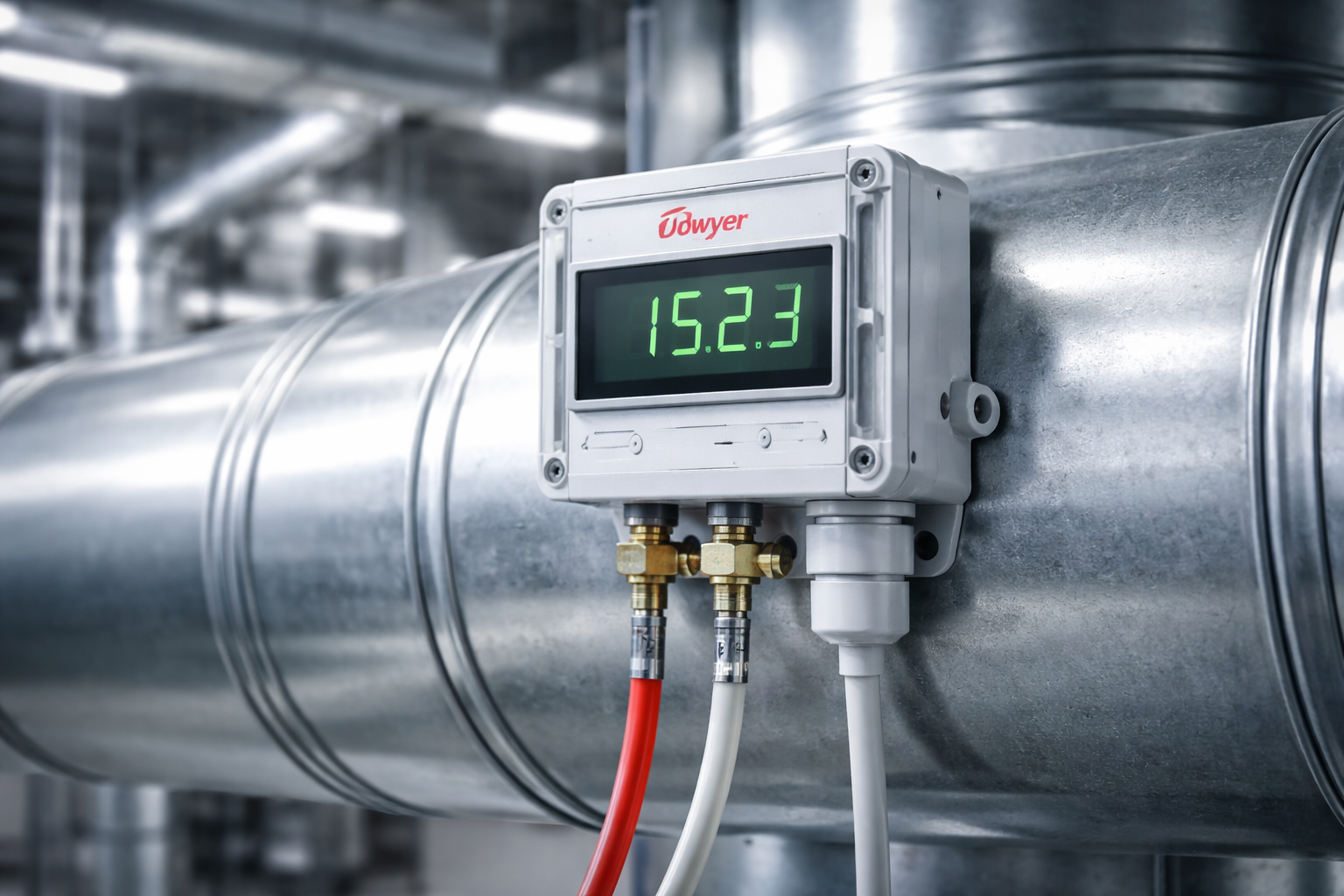
For HVAC installers and commissioning technicians, the differential pressure (DP) sensor is a critical component. Whether you are proving flow on a chiller or maintaining static pressure in a duct, you cannot commission a building without accurate pressure readings.
Finding these sensors in stock locally, however, can be a challenge. Waiting three weeks for a sensor to arrive from overseas often isn't an option when you have a handover deadline looming.
At Controls Traders, we warehouse a comprehensive range of [Differential Pressure Sensors] in Adelaide, ready for immediate dispatch across Australia. Here is what you need to know before you buy.
1. What Differential Pressure Sensors Do
A differential pressure sensor measures the difference in pressure between two points in a system—the high side and the low side. It converts this mechanical difference into an electrical signal (typically 0-10V or 4-20mA) that your Building Management System (BMS) can read and act upon.
In modern HVAC, these sensors are the "eyes" of the system, allowing the BMS to modulate fans and pumps to match actual building demand rather than guessing.
2. Types and Ranges
When sourcing a sensor, you generally need to choose between two main categories:
- Air Differential Pressure (Dry Media): Used for measuring air pressure in ducts, plenums, and room spaces. These typically measure in Pascals (Pa).
- Liquid Differential Pressure (Wet Media): Used for measuring pressure drop across pumps, chillers, and valves. These are measured in kPa or Bar.
We stock brands like Dwyer, BAPI, ACI, and Siemens that offer field-selectable ranges. This means you can buy one sensor and configure it for 0-250Pa or 0-500Pa on-site, saving you from carrying multiple part numbers in your van.
3. Applications in HVAC
You will typically install these sensors for three main applications:
- Filter Monitoring: Measuring the pressure drop across a filter bank. As the filter clogs, pressure rises, triggering a "Dirty Filter" alarm in the BMS.
- Duct Static Pressure: Located two-thirds down the duct, this sensor tells the VSD on the supply fan to speed up or slow down to maintain constant airflow as VAV boxes open and close.
- Building Pressurization: Critical for stairwell pressurization systems (fire safety) to ensure smoke does not enter escape routes.
4. Key Buying Considerations
Before placing an order, check these three specs:
- Output Signal: Does your controller require 0-10V, 4-20mA, or a direct BACnet/Modbus connection?.
- Display: Do you need an LCD screen on the unit for local maintenance checks?
- Unidirectional vs. Bidirectional: Are you measuring positive pressure only (0 to 100Pa) or do you need to monitor positive and negative swings (-50 to +50Pa)?
5. Why Local Stock Matters
Supply chain delays are the enemy of profitable projects. Many suppliers list items online that are actually drop-shipped from Europe or the US, leading to unexpected delays.
At Controls Traders, we warehouse our stock locally in South Australia. This "convenience factor" means you don't have to wait for international freight. If a sensor fails on a critical site, you need a replacement in days, not weeks.
6. Where to Buy in Australia
You can purchase high-quality sensors directly from Controls Traders. We are an Australian-owned business based in Stepney, South Australia.
- Brands We Stock: We carry trusted global names including Dwyer, Belimo, Siemens, BAPI, Veris, and Automated Components Inc (ACI).
- Delivery: We offer global shipping and fast delivery Australia-wide.
- Support: With over 40 years of industry experience, our team can help you cross-reference old part numbers to find a modern equivalent that fits your budget.
7. Summary
Don't let a missing sensor hold up practical completion. Whether you need a simple switch for a filter or a high-precision transducer for a lab, buying from a local supplier ensures you get the right part, right now.
Read more
What Is a Pressure-Independent Control Valve (PICV)?
For HVAC consultants and commissioning engineers, hydraulic instability is the enemy of efficiency. In a traditional variable volume system, pressure fluctuations caused by opening and closing valves elsewhere in the loop can cause "ghost flows" and overflow conditions.
The solution to this hydraulic cross-talk is the Pressure-Independent Control Valve (PICV).
At Controls Traders, we have over 40 years of industry experience supplying high-performance valves to the Australian market. We see PICVs as the standard for modern energy-efficient design, replacing the traditional "control valve plus balancing valve" setup.
What Is a Pressure Independent Control Valve (PICV)?
A PICV is a single valve body that combines three functions:
- Differential Pressure Control: It mechanically absorbs pressure fluctuations in the system.
- Flow Regulation: It limits the maximum flow rate to a design value.
- Temperature Control: It modulates flow based on BMS demand.
Unlike a standard control valve, where flow is a function of both opening area and differential pressure ($Q = Kv \times \sqrt{\Delta P}$), a PICV maintains a constant flow rate regardless of pressure changes in the branch line.
How a PICV Maintains Flow
In a large chilled water system, when a valve closes on the ground floor, the pump pressure (head) increases for the rest of the building. In a standard system, this pressure spike forces more water through open valves on the top floor, leading to overflow and Low $\Delta T$ Syndrome.
A PICV prevents this using an internal mechanical regulator (often a diaphragm and spring).
- Pressure Rising: As system pressure rises, the regulator constricts the inlet port, absorbing the excess energy.
- Pressure Falling: As system pressure drops, the regulator opens the inlet port.
This ensures that the control valve cone (the part the actuator moves) always sees a constant differential pressure, making the flow dependent only on the actuator position, not the pump speed.
Key Components
When specifying or installing a PICV, you are dealing with three distinct elements:
- The Regulator Cartridge: This handles the dynamic balancing. It compensates for pressure variations (typically up to 400–600kPa) to ensure the control section operates effectively.
- The Flow Limiter: Most PICVs allow you to set a maximum $Kv$ or $L/s$ value. This replaces the need for a separate manual balancing valve (STAD).
- The Actuator: This is the interface with your BMS. Because the valve body handles the pressure, the actuator does not need to fight high differential pressures, often allowing for smaller torque requirements.
- Note: We stock Belimo Actuators and Siemens Actuators compatible with various PICV bodies.
Advantages for Coil Control and Efficiency
Why are consultants specifying PICVs for hospitals and Green Star buildings?
- No Over-Pumping: The valve physically prevents overflow. If a coil needs 0.5 L/s, it gets 0.5 L/s, even if the pump ramps up.
- High $\Delta T$: By preventing overflow, water stays in the coil long enough to facilitate proper heat transfer, ensuring a high Return Water Temperature. This maximizes chiller efficiency.
- Simplified Commissioning: There is no need for iterative proportional balancing. You simply set the dial on the valve to the design flow rate, and the valve self-balances.
Advanced Tech: For the ultimate in visibility, the Belimo Energy Valve combines a PICV with flow sensors and temperature sensors to measure energy consumption ($kWh$) and self-optimize based on real-time coil performance.
Applications in Commercial Buildings
PICVs are the "go-to" solution for variable flow systems where efficiency is critical.
- Fan Coil Units (FCUs): Ensuring hundreds of small zones don't interact hydraulically.
- Air Handling Units (AHUs): Precise temperature control for large coils.
- Chilled Beams: Where precise low-flow control is required.
Example Installation
Scenario: A 10-story office building in Adelaide. The Problem: When the morning warmup sequence ends and VAV boxes throttle down, the pressure in the riser spikes. The PICV Solution: Instead of installing a 2-way ball valve and a manual balancing valve at every FCU, the installer fits a single Pressure Independent Control Valve.
- The installer sets the max flow to 0.2 L/s.
- The BMS sends a 0-10V signal.
- Even as the riser pressure fluctuates between 50kPa and 200kPa, the PICV maintains steady control, preventing the "hunting" and temperature swings common in older systems.
Summary
The Pressure-Independent Control Valve is not just a valve; it is a hydraulic stabiliser. It decouples the control loop from the hydraulic loop, allowing your BMS to control temperature without fighting system pressure.
At Controls Traders, we stock a wide range of PICVs and matching actuators from brands like Belimo and Siemens. Whether you are retrofitting a plant room or designing a new build, getting the valve selection right is the first step to a high-efficiency building.
Read the full guide on our website for flow diagrams and actuator pairing charts.
Read more

Choosing the Right Temperature Sensor for Your BMS Setup
In Building Management Systems (BMS), the controller is the brain, but the sensors are the nervous system. No matter how advanced your iSMA or Siemens Controller is, it cannot maintain occupant comfort or energy efficiency if it is receiving inaccurate data.
For mechanical engineers and installers, selecting the "right" sensor isn't just about picking a catalogue number. It requires matching the physical form factor to the medium (air or water) and the electrical characteristics to the controller’s input card.
At Controls Traders, we stock the full spectrum of Sensors & Transducers from trusted brands like BAPI, ACI, and Siemens. Here is a technical breakdown of how to choose the right temperature sensor for your application.
1. Why Temperature Sensors Matter in BMS Control
A temperature sensor is the primary variable for 90% of HVAC control loops.
- Accuracy: An error of just 1°C in a chilled water return sensor can cause a chiller to stage up unnecessarily, wasting massive amounts of energy.
- Response Time: A sensor with too much thermal mass will lag, causing the control loop to hunt (oscillate).
- Durability: Sensors in harsh environments (like cooling towers) must withstand moisture and chemical corrosion.
2. Overview of Sensor Types
We categorise sensors based on where they live and what they measure.
- Room Sensors: These are aesthetic, wall-mounted units. Modern versions, such as those from BAPI or Siemens, often combine temperature with humidity and CO2 monitoring in a single housing.
- Duct Sensors: Available as rigid probes (single point) or flexible averaging elements. Rigid probes are for VAV boxes or small ducts; averaging sensors are critical for mixed-air plenums in AHUs to prevent stratification errors.
- Immersion (Pipe) Sensors: These require a stainless steel or brass thermowell screwed into the pipe. They provide the most accurate reading of fluid temperature.
- Strap-On Sensors: These clamp to the outside of a pipe. While less accurate than immersion sensors (due to ambient air influence), they are ideal for retrofits where you cannot drain the system to install a well.
- Outdoor Sensors: Housed in sun-shields to prevent solar radiation from skewing the ambient air reading.
3. Thermistor vs. RTD: The Electrical Difference
Once you have the physical type, you must select the sensing element. This creates the most confusion for junior technicians.
Thermistors (NTC - Negative Temperature Coefficient)
- Common Types: 10k Type 2, 10k Type 3, 20k.
- How they work: Resistance drops as temperature rises.
- Pros: High sensitivity (large resistance change per degree), cost-effective, and robust wiring connections.
- Cons: Non-linear curve (requires specific look-up tables in the BMS controller).
- Best For: General HVAC applications like room temp, return air, and non-critical loops.
RTDs (Resistance Temperature Detectors)
- Common Types: PT100, PT1000.
- How they work: Resistance increases linearly as temperature rises.
- Pros: Extremely stable, highly accurate over wide ranges, and linear response.
- Cons: More expensive; PT100s specifically require 3-wire or 4-wire transmitters to compensate for lead wire resistance.
- Best For: Critical process control, energy metering (thermal calculation), and central plant supplies.
4. Application-Specific Recommendations
Based on our experience supplying the Australian market, here are common pairings:
|
|
|
|
|
|
|
|
|
|
|
|
|
|
|
|
|
|
|
|
5. Mounting and Placement Tips
Even the best sensor fails if placed poorly.
- Thermal Paste: When installing Pipe Sensors into thermowells, always use thermal transfer compound. Without it, the air gap acts as an insulator, causing slow response times.
- Duct Position: Place duct sensors in the middle third of the duct stream. Avoid placing them immediately after heating coils or humidifiers—give the air time to mix.
- Cable Runs: For long cable runs (>30m), avoid using low-resistance sensors like PT100s unless you use a transmitter. The wire resistance will add to the sensor reading, creating an artificial offset.
6. Common Errors and Troubleshooting
- The "Offset" Mistake: If your BMS reads -40°C or +120°C, you likely have an open or short circuit, or the wrong sensor type selected in software (e.g., configuring a 10k Type 2 input for a 10k Type 3 sensor).
- Self-Heating: Running too much voltage through a tiny thermistor can cause it to heat up slightly, throwing off the reading. Ensure your controller inputs are matched to the sensor specs.
- Water Ingress: For Fridges/Freezers or outdoor sensors, ensure the cable gland is facing downwards to create a drip loop, preventing water from wicking into the housing.
7. Summary
Selecting the right temperature sensor ensures your BMS operates efficiently and your tenants stay comfortable. Whether you need a simple strap-on sensor for a retrofit or a high-precision immersion sensor for a hospital chiller, the details matter.
At Controls Traders, we warehouse a massive range of sensors from BAPI, ACI, and Siemens, ready for fast delivery across Australia.
Need to check a resistance curve or find a compatible thermowell? Read the full guide on our website for selection charts and technical specs.
Read more

LoRaWAN vs BACnet MS/TP: Which Protocol Should You Use?
For decades, the "twisted pair" ruled the BMS world. If you were fitting out a plant room in a hospital or a university campus, you pulled kilometers of MSTP cable, terminated RS-485 shields, and chased down ground loops.
But with the rise of IoT and the push for cheaper retrofits, LoRaWAN (Long Range Wide Area Network) has entered the chat.
For integrators, the question isn't "which is better?"—it’s "which is right for this specific application?" Using LoRaWAN for critical valve control is a disaster waiting to happen, just as running RS-485 across a 5km campus for three temperature sensors is financial suicide.
At Controls Traders, we stock both the heavy-duty wired controllers (iSMA, EasyIO, Siemens) and modern wireless sensors (like Aranet). Here is our technical breakdown of when to pull cable and when to go wireless.
1. Introduction to HVAC Communication Protocols
The choice between wired and wireless dictates your labour costs, reliability, and commissioning time.
- Wired (BACnet MS/TP): The industry standard for real-time control. It is robust but labor-intensive to install.
- Wireless (LoRaWAN): The disruptor. It offers incredible range and battery life but has very low bandwidth and high latency.
2. What is BACnet MS/TP?
BACnet MS/TP (Master-Slave/Token-Passing) runs on the RS-485 physical layer. It connects devices in a daisy-chain topology.
- How it works: A token is passed between controllers; the device holding the token can talk.
- The Gear: This is the native language of most BACnet Controllers we stock, including iSMA, EasyIO, and Siemens. Even intelligent field devices like Belimo Actuators now often come with BACnet MS/TP built-in.
- Pros: Real-time speed, high reliability, no batteries to replace.
3. What is LoRaWAN?
LoRaWAN is a Low Power, Wide Area Network protocol designed for IoT sensors. Unlike WiFi (high bandwidth, short range) or Bluetooth (short range), LoRaWAN uses sub-gigahertz radio frequencies to transmit small data packets over massive distances.
- How it works: Sensors broadcast data to a central Gateway, which passes it to your BMS or Cloud via IP.
- The Gear: Typically used for environmental monitoring (Temperature, CO₂, Humidity) in hard-to-reach places. Brands like Aranet4 utilize wireless technology to simplify these deployments.
- Pros: 10km+ range (line of sight), 5+ year battery life, penetrates concrete walls well.
4. Head-to-Head Comparison
|
|
|
|
|
|
|
|
|
|
|
|
|
|
|
|
|
|
|
|
|
|
|
|
|
|
|
|
5. Decision Matrix: When to Use Which?
Use BACnet MS/TP When:
- You need Control: You generally cannot "write" to a LoRaWAN device fast enough to control a valve. If you need to modulate a Belimo Actuator to maintain a discharge air temperature, you must use a wired connection (0-10V or BACnet).
- Power is Available: If you are running 24V/240V to a unit anyway, running a comms cable alongside it is trivial.
- Mission Criticality: If the comms drop out, does the plant fail? If yes, use wire.
Use LoRaWAN When:
- Retrofitting Heritage Buildings: You cannot drill through asbestos or heritage listed walls to run cable.
- Sprawling Campuses: You need to monitor a fridge temp in a shed 800m away from the main BMS panel.
- Temporary Audits: You need to log Room Sensors data for a week to prove a fault, then remove the sensors.
6. Example: The "Hybrid" Remote Plant Room
Imagine a university campus with a main chiller plant (Building A) and a small remote lecture hall (Building B) 500m away.
- In the Plant Room (Building A): Use BACnet Controllers (like an EasyIO or iSMA unit) wired via MS/TP to the chillers, pumps, and VSDs. You need second-by-second data to manage the hydraulic pressure and flow,.
- In the Lecture Hall (Building B): Instead of trenching cable for 500m just to check room temperature, install LoRaWAN Sensors (or similar wireless sensors like Aranet) in the rooms. The gateway sits in Building A, picking up the signals wirelessly.
7. Summary and Recommendations
Don't force a square peg into a round hole.
- Control with BACnet: Keep your heavy switching, actuation, and PID loops on the wired bus.
- Monitor with LoRaWAN: Use wireless to gather data from difficult locations without the cabling cost.
At Controls Traders, we have 40 years of industry experience helping integrators design these networks. We stock the BACnet controllers you need for the plant room and the wireless sensors you need for the field.
Need help selecting a gateway or controller? Read the full guide on our website for protocol diagrams and integration options.
Read more
How to Retrofit Pneumatic Controls to a Digital BMS
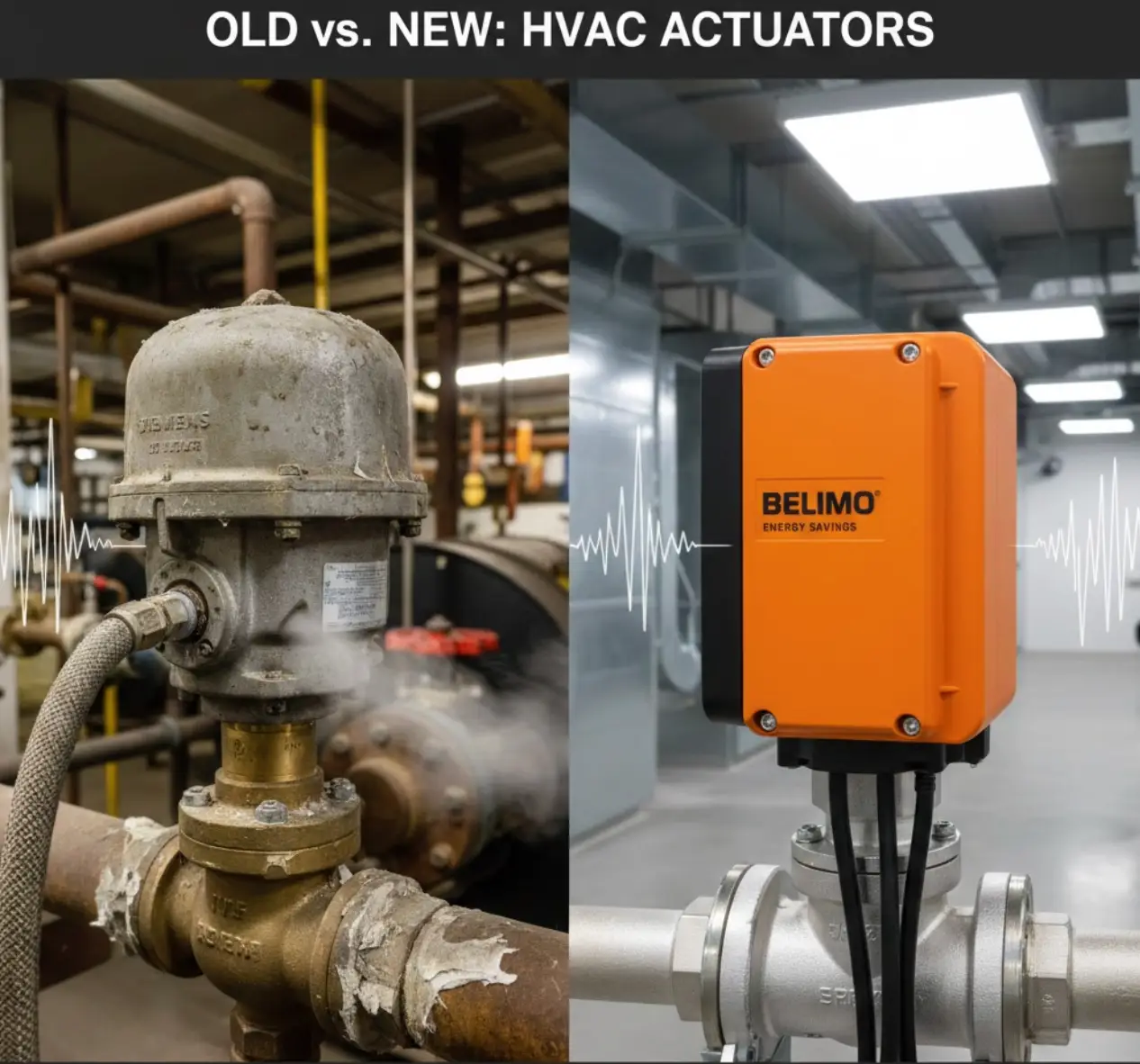
If you walk into the plant room of a hospital in Melbourne or an office block in Sydney built before 2000, there is a good chance you will hear the hiss of compressed air.
Pneumatic controls—relying on 3–15 psi signals to open valves and dampers—were the industry standard for decades. They are durable and safe, but they are also "dumb." They drift, they leak, and they offer zero data visibility.
For modern facility management, "blind" systems are no longer acceptable. The push for NABERS ratings and energy efficiency is driving a massive wave of retrofits across Australia and New Zealand.
At Controls Traders, we supply the hardware for these upgrades every day. Whether you are planning a full rip-and-replace or a hybrid integration, here is the technical workflow for retrofitting pneumatics to a digital Building Management System (BMS).
1. Overview: Pneumatic Systems in Older Buildings
In a legacy pneumatic system, a compressor sends air to a Receiver-Controller (RC). Thermostats act as bleed valves; as the room warms up, the thermostat changes the air pressure in the line. This pressure change physically inflates a diaphragm on a valve or damper actuator to move it.
While mechanically ingenious, these systems have no memory and no feedback loop. If a damper is stuck, the compressor just keeps pushing air, and the facilities manager has no idea until a tenant complains.
2. Why Retrofit to Digital?
The ROI on replacing pneumatics is usually driven by three factors:
- Energy Waste: Compressed air is one of the most expensive utilities in a building. Leaking plastic tubes and constant compressor cycling waste thousands of dollars annually.
- Drift: Pneumatic thermostats require constant re-calibration (often seasonally). Digital sensors do not drift.
- Visibility: You cannot optimize what you cannot measure. A digital BMS allows for trends, alarms, and remote tuning.
3. Key Components Needed
To convert air to electrons, you generally need three categories of hardware:
- Electronic Actuators: You will replace the pneumatic "mushrooms" with 24V electric motors. High-torque models are essential here, as older valves often require significant force to close.
- Digital Controllers: These replace the pneumatic logic. You need Direct Digital Control (DDC) units that speak open protocols like BACnet or Modbus. We stock brands like iSMA and EasyIO which are popular for retrofits due to their flexibility.
- Transducers (for Hybrid Systems): If you cannot afford to replace every actuator immediately, you use a P-to-E (Pressure to Electric) or E-to-P transducer. This allows a digital BMS to send a 0-10V signal that is converted into a 3-15 psi air output to drive an existing pneumatic valve.
4. Step-by-Step Retrofit Workflow
-
Step 1: The Audit
- Identify which end devices (valves/dampers) are serviceable. If a 30-year-old globe valve is seized, putting a new electric actuator on it is a waste of money. Replace the entire valve body if necessary.
-
Step 2: Demolition and Capping
- Isolate the main air supply. When removing pneumatic lines, cap them off immediately. If you are doing a staged retrofit (floor by floor), you must maintain system pressure for the rest of the building.
-
Step 3: Mechanical Linkages
- This is the hardest part of the retrofit. Pneumatic actuators often use unique linkages.
Damper Retrofits: Belimo Actuators are the gold standard here because they offer universal clamp mechanisms that fit directly onto most existing jackshafts.
Valve Retrofits: You may need specific linkage kits to mount a modern Siemens Actuator onto an older valve body. Measure the stem stroke and bonnet diameter carefully.
- This is the hardest part of the retrofit. Pneumatic actuators often use unique linkages.
-
Step 4: Wiring and Sensors
- Run 24V power and shielded communications cable (MSTP/IP). Replace the pneumatic wall thermostats with 10k thermistors or networked sensors.
5. Calibration and Commissioning
Unlike pneumatics, digital actuators need to be "taught" their limits.
- Stroke Adaptation: Most modern actuators (like the Belimo MP/MF series) have a button to trigger an adaptation run. The actuator drives fully open and fully closed to map the 0-10V signal to the mechanical stroke.
- Signal Verification: Ensure 0V actually equals 0% (closed) and 10V equals 100% (open). Reverse this logic for heating valves if they are Normally Open (NO).
6. BMS Integration
Once the hardware is installed, the BACnet Controllers come into play. Instead of a simple proportional band (like a pneumatic thermostat), you now configure PID loops in the software. This allows you to implement strategies that were impossible before, such as:
- Optimal Start/Stop
- Night Purge
- CO2 Demand Control Ventilation
7. Common Problems (And How to Avoid Them)
- Under-Torquing: Pneumatic pistons are incredibly powerful. A common mistake is replacing a pneumatic actuator with a weak electric one. For large valves, ensure you select an actuator with sufficient force (e.g., Siemens SAX series with 800N force).
- Hybrid Headaches: If using E-to-P transducers, ensure the air quality is clean and dry. Dirty oil in the air lines will clog the tiny ports in electronic transducers rapidly.
- Power Sizing: Pneumatics didn't use electricity. When adding 50 electric actuators to a floor, ensure your 24V transformers and cabling gauge are sized to handle the VA load (including inrush current).
Conclusion
Retrofitting pneumatic controls extends the life of mechanical plant and drastically cuts energy bills. While the upfront labour is significant, the removal of compressor maintenance and the gain in control precision pays for itself.
At Controls Traders, we have 40 years of industry experience helping contractors navigate these upgrades. We stock the actuators, linkage kits, and controllers you need in Adelaide, ready for Australia-wide delivery.
Ready to start your retrofit? Read the full guide on our website for retrofit tool lists and product recommendations.
Read more

Using VSDs to Reduce HVAC Fan Energy Use by 30%
If you are managing a commercial building in Australia, you know that HVAC consumption typically accounts for 40–50% of your total electricity bill. Within that plant room, supply and extract fans are often the biggest culprits of energy waste.
The solution isn't just buying newer fans; it is controlling the ones you have intelligently.
At Controls Traders, we have supplied building automation components for over 40 years. One of the most effective upgrades we see for immediate ROI is the installation of Variable Speed Drives (VSDs). This guide explains the physics behind the savings and how to apply them to your facility.
In short, Variable Speed Drives reduce HVAC fan energy use because they:
1. Match fan speed to real-time airflow demand instead of running at full speed.
2. Exploit the fan affinity laws, where small speed reductions deliver large energy savings.
3. Enable intelligent control via BMS signals, pressure sensors, and CO₂-based demand control.
1. Introduction to VSDs
A Variable Speed Drive (VSD)—also known as a Variable Frequency Drive (VFD)—is an electronic device that controls the speed of an AC induction motor by varying the frequency and voltage supplied to it.
Think of a VSD as a "dimmer switch" for your heavy industrial motors. Without a VSD, your AHU (Air Handling Unit) fan is either OFF or running at 100% full speed. With a VSD, that same fan can run at 40%, 60%, or 95%—matching the exact airflow required by the building at that moment.
2. Why HVAC Fans Waste Energy at Full Speed
Most HVAC systems in Australia are designed for "Design Day" conditions—the hottest days of the year (e.g., a 40°C day in Adelaide or Western Sydney).
However, these peak conditions occur for only a fraction of the year. For the remaining 95% of the time, the building operates at partial load. If your supply fans are running at full speed during mild weather, you are pushing more air than necessary.
In older systems without VSDs, this excess air is often choked back using mechanical dampers or inlet guide vanes. This is the energy equivalent of driving your car with your foot flat on the accelerator and controlling your speed by riding the brakes. It is inefficient and mechanically stressful.
3. How VSDs Optimise Supply and Extract Fans
A VSD replaces the need for mechanical throttling. By receiving a signal from your Building Management System (BMS) or a standalone controller, the VSD slows the motor itself down.
- Static Pressure Control: As VAV (Variable Air Volume) boxes in the office close, duct pressure rises. A pressure sensor detects this and tells the VSD to slow the fan down to maintain a setpoint.
- CO₂ Demand Control: If a meeting room is empty, [CO₂ Sensors] detect low occupancy. The BMS signals the VSD to reduce fresh air intake, saving energy on both fan power and the conditioning of outside air.
4. Energy Savings Explained (The Affinity Laws)
The financial magic of VSDs lies in the Fan Affinity Laws.
While flow is proportional to speed, power is proportional to the cube of the speed. This is known as the "Cube Law." $$Power \propto Speed^3$$
This means a small reduction in fan speed results in a massive reduction in energy consumption.
5. Example: Reducing Fan Speed by 20%
Let’s look at the math for a standard supply fan running at 80% speed (a 20% reduction):
- Flow: $80%$ speed = $80%$ airflow.
- Power: $0.80 \times 0.80 \times 0.80 = 0.512$ (or $51.2%$).
The Result: By slowing your fan down by just 20%, you reduce its electricity consumption by roughly 50%. Even a modest reduction of 10% speed saves nearly 30% in energy. This is why VSDs offer such a rapid payback period.
6. Where VSDs Are Typically Installed
VSDs are versatile and can be applied to almost any rotating equipment in the plant room:
- AHU Supply & Return Fans: To match airflow to VAV demand.
- Chilled Water Pumps: To vary water flow through chillers and coils (Variable Primary Flow).
- Cooling Tower Fans: To ramp fans up/down based on condenser water return temperature, rather than cycling them on/off.
- Car Park Exhaust: To run fans at low speed for ventilation and ramp to high speed only when CO levels rise.
7. Common Issues and Installation Notes
While VSDs are powerful, they require correct installation:
- Harmonics: VSDs can introduce electrical noise (harmonics) back into the building's power supply. Ensure you select drives with built-in filters or line reactors.
- Motor Cooling: A standard motor relies on its internal fan for cooling. If you run it at very low speeds (e.g., <20Hz) for long periods, it may overheat.
- Cable Length: Long cable runs between the VSD and the motor can cause voltage spikes. You may need specific screened cables.
8. Economic Benefits and Payback
Beyond the electricity bill, VSDs reduce mechanical wear. By "soft starting" the motor (ramping up slowly), you eliminate the high-torque shock of "Direct On Line" (DOL) starting, which extends the life of belts, bearings, and couplings.
For most commercial buildings, the ROI on a VSD retrofit is typically under 2 years, making it one of the most attractive CapEx projects for facility managers.
Summary
If your HVAC fans are running at constant speed while your building load varies, you are paying for energy you don't use. Implementing Variable Speed Drives allows you to harness the Cube Law, turning a 20% speed reduction into a 50% energy saving.
At Controls Traders, we warehouse a range of drives and controls suitable for the Australian market, ready for fast delivery.
Ready to upgrade your plant room? Read the full guide on our website for installation specs and recommended models. Browse our range of Variable Speed Drives and Test Instruments to get started.
Read more

Where to Place a CO₂ Sensor in an Open-Plan Office
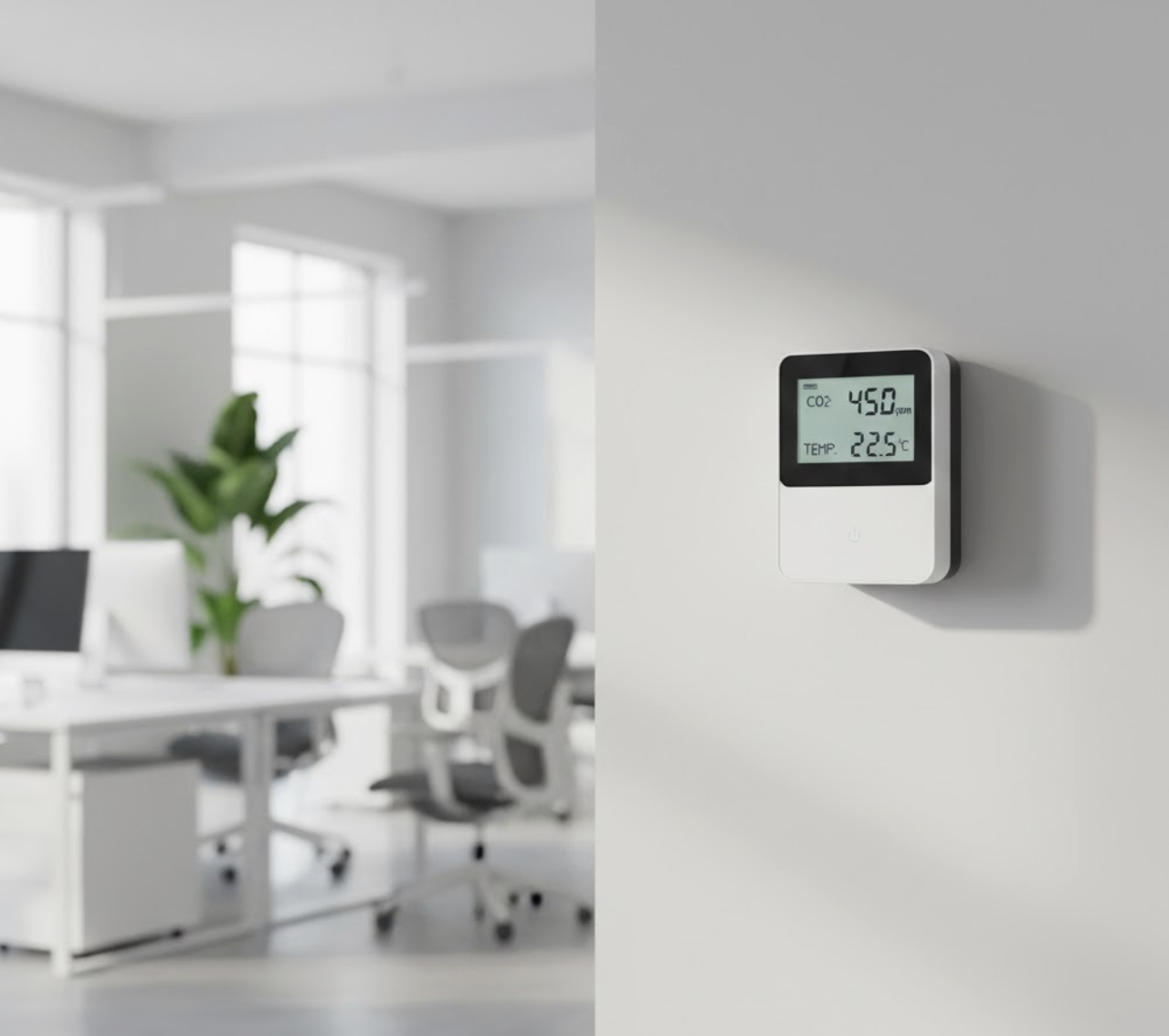
For HVAC installers and BMS technicians, the "set and forget" approach to sensor installation is a relic of the past. In modern Demand Control Ventilation (DCV) strategies, the CO₂ sensor is the heartbeat of the system.
If a temperature sensor is off by a degree, someone puts on a jumper. If a CO₂ sensor is poorly placed, the BMS either drastically under-ventilates (causing high PPM, drowsiness, and NCC compliance issues) or over-ventilates (pulling in unconditioned outside air and destroying energy efficiency).
At Controls Traders, backed by over 40 years of industry experience, we know that the sensor is only as good as its location. This guide covers the technical best practices for placing CO₂ sensors in open-plan offices to ensure accurate Indoor Air Quality (IAQ) monitoring.
In short, correct CO₂ sensor placement in an open-plan office is critical because it:
1. Ensures the BMS responds to actual occupant CO₂ levels, not diluted or stagnant air.
2. Prevents over- or under-ventilation that impacts indoor air quality and energy efficiency.
3. Enables effective demand-controlled ventilation in VAV and fan coil systems.
1. Why CO₂ Placement Matters
In a VAV (Variable Air Volume) or fan coil system, the CO₂ reading directly influences the damper position. The goal is typically to maintain indoor CO₂ levels below 800–1000 ppm (parts per million).
If a sensor is placed in a "dead zone" where air doesn't circulate, it may read 600 ppm while the occupied zone is hitting 1200 ppm. Conversely, placing a sensor directly in the path of supply air will result in artificially low readings, tricking the BMS into shutting down fresh air intake when it is needed most. Correct placement ensures the BMS reacts to the actual load generated by the occupants.
2. How CO₂ Behaves in Open Spaces
Unlike temperature, which equalizes relatively quickly, CO₂ is a heavy gas generated by point sources (people). In a calm open-plan office, CO₂ tends to pool around occupants before diffusing into the general return air path.
However, office air is rarely still. The HVAC system creates currents. Therefore, the sensor must be placed where it captures the mixed air representative of the breathing zone, not a stagnant pocket or a diluted airstream.
3. Best-Practice Placement Guidelines
The "Golden Rule" of sensor placement is to measure the air that people are actually breathing.
- Height: The sensor should be mounted at the breathing zone height.
- Distance: Keep sensors away from corners where air creates eddies/dead spots.
- Coverage: Ensure the sensor is centrally located relative to the zone it controls.
4. Height, Wall Positioning, and Airflow
Vertical Placement (Height)
For an open-plan office where occupants are mostly seated, the sensor should be mounted between 1.2m and 1.5m from the finished floor. This aligns with the seated breathing height and is generally consistent with light switch height for ease of cabling.
Avoid: Ceiling mounting for open-plan control sensors. While ceiling sensors are common, CO₂ concentration at the ceiling (near the return plenum) can differ significantly from the breathing zone, especially in high-ceiling spaces or systems with poor mixing.
Wall Selection
Mount the sensor on an internal column or partition wall. Avoid: External walls. Although modern sensors often have temperature compensation, external walls act as thermal bridges. If you are using a combined Temp/CO₂ unit (like those from Sensors & Transducers ranges), the radiant cold or heat from an external wall will skew the temperature reading, even if the CO₂ reading is acceptable.
5. Avoiding False Readings
Installers often compromise on location to save cabling time. Avoid these three common "sensor killers":
- Supply Air Wash: Never place the sensor within 1.5m to 2m of a supply air diffuser. The sensor will read the clean supply air (approx 400ppm) rather than the room air, causing the fresh air dampers to throttle down incorrectly.
- Doorways & Corridors: Do not mount sensors next to main entry doors or in corridors. Drafts from opening doors or unconditioned hallways will cause erratic spikes and dips in the BMS data logs.
- Direct Sunlight: Direct UV exposure can degrade plastic housings and affect the infrared (NDIR) components used in high-quality sensors.
6. How Many Sensors Do You Need?
A single sensor cannot effectively monitor a 500sqm floor plate.
- Zone-Based approach: Ideally, install one sensor per VAV zone. If one VAV box serves a distinct cluster of desks, that cluster needs its own sensor.
- Radius approach: As a general rule of thumb for open spaces, one sensor covers approximately 70m² to 100m², provided there are no full-height partitions blocking airflow.
7. Common Mistakes Installers Make
- The "Breath Test" Error: Installing a sensor directly behind a dedicated workstation (e.g., right next to a receptionist's head). If one person exhales directly onto the sensor, the BMS may ramp up the plant for the whole zone based on one person's coffee breath.
- The Return Air Duct Trap: Relying solely on duct-mounted sensors in the main return air shaft. While useful for general building monitoring, duct sensors measure an average of the whole floor. They cannot detect that Meeting Room B is full of people and suffocating while the rest of the office is empty. Room-level sensing is superior for DCV.
8. Example Layout Scenario
Scenario: A 100m² open-plan zone with 10 desks and south-facing windows.
- Bad Placement: On the external south wall (thermal issues) or on the ceiling directly between two supply diffusers (short-cycling).
- Good Placement: On an internal structural column in the center of the desk cluster, mounted at 1.5m high. This captures the mixed air from the occupants without being influenced by the supply air or the external wall temperature.
9. Conclusion and Recommendation
Correct CO₂ sensor placement is the difference between an efficient, compliant building and one that generates constant "it's stuffy in here" complaints.
Always aim for the breathing zone (1.2m–1.5m), use internal walls, and ensure one sensor per mechanical control zone.
At Controls Traders, we stock a wide range of reliable HVAC Room Sensors and combined units from trusted brands like Siemens, BAPI, and Automated Components Inc (ACI).
Unsure which sensor fits your BMS specification? Read the full guide on our website for placement diagrams and product suggestions.
Read more

Understanding the Difference Between 2-Way and 3-Way Valves
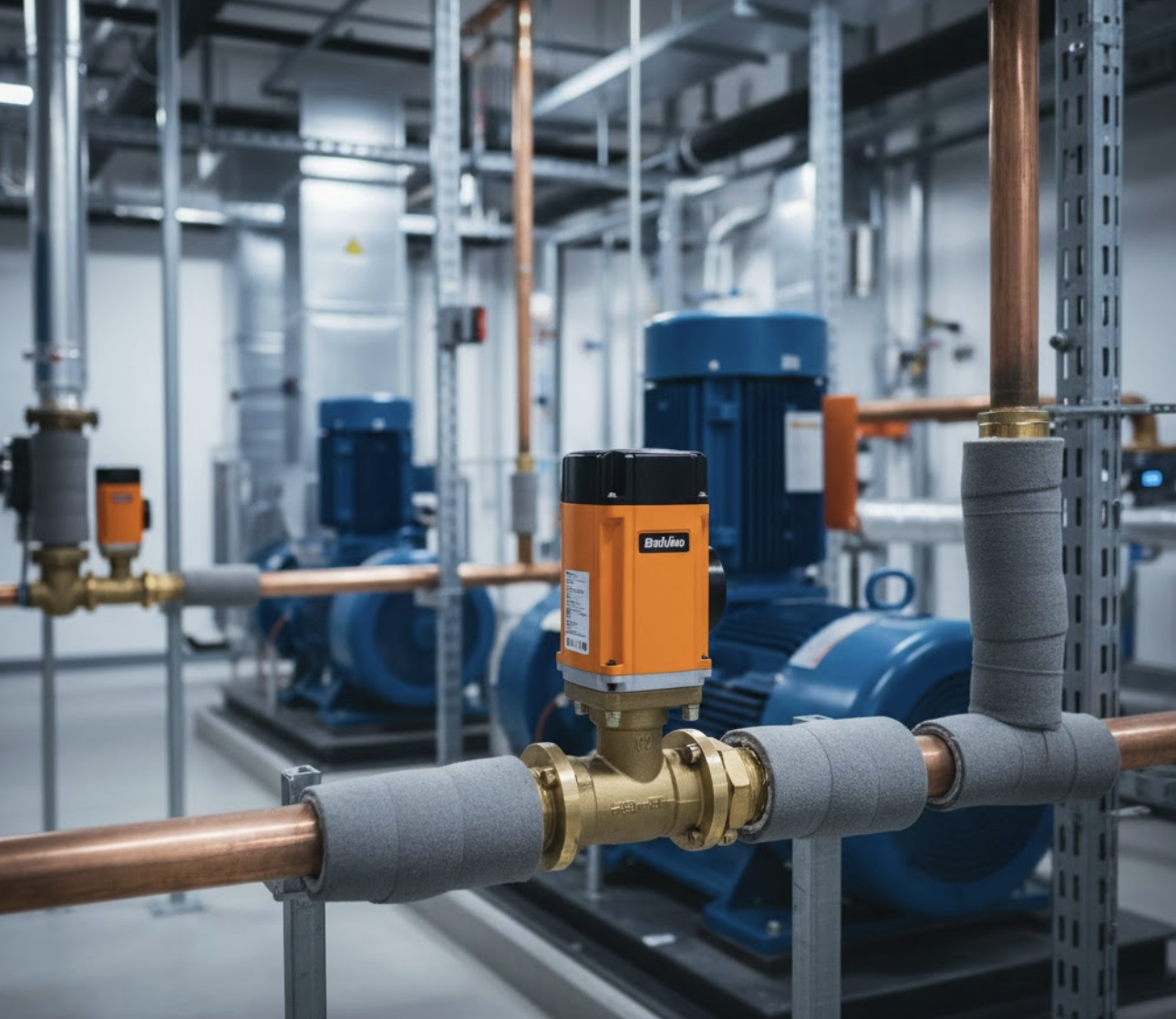
For HVAC installers and building automation technicians, selecting the right control valve is fundamental to system stability. While the industry has largely shifted toward variable flow systems, we still see plenty of 3-way valves in older Australian plant rooms.
Understanding the physics and hydraulic impact of 2-way vs. 3-way valves is critical—whether you are commissioning a modern VAV system or retrofitting a legacy constant-volume chiller.
At Controls Traders, we stock a wide range of Control Valves from brands like Belimo and Siemens. Here is a technical breakdown of the differences and when to use each.
What is a 2-Way Valve?
A 2-way valve has two ports: an inlet (A) and an outlet (AB). Its primary function is to throttle the flow of water through a coil to control temperature.
- How it works: As the demand for cooling decreases, the valve closes, restricting the flow of chilled water to the coil.
- System Impact: Because the valve stops flow, it creates a Variable Flow system. When the valve closes, the system flow rate drops, allowing Variable Speed Drives (VSDs) on the pumps to ramp down, saving significant electrical energy.
- Typical Application: Modern energy-efficient buildings using variable speed pumping, AHUs, and Fan Coil Units (FCUs).
What is a 3-Way Valve?
A 3-way valve has three ports: an inlet (A), a bypass (B), and a common outlet (AB).
- How it works: Instead of stopping the water, a 3-way valve diverts it. When the coil doesn't need cooling, the valve directs the water around the coil (bypass) back to the return line.
- System Impact: This creates a Constant Flow system. The pump works at the same speed regardless of the cooling load because the total volume of water circulating remains constant—it just skips the coil.
- Typical Application: Older constant-volume systems, or specific "end-of-line" bypass points to ensure minimum flow for chiller protection.
Key Differences: Flow, Energy, and Design
|
Feature |
2-Way Valve |
3-Way Valve |
|
Flow Characteristic |
Variable Flow (Varies with load) |
Constant Flow (Always 100%) |
|
Pump Energy |
High Efficiency: VSD pumps ramp down at part load. |
Low Efficiency: Pumps run at 100% speed continuously. |
|
Water Temperature |
Return water temp rises at part load (High ΔT). |
Return water temp drops at part load (Low ΔT). |
|
System Cost |
Lower piping cost (2 pipes), higher control complexity (requires VSDs). |
Higher piping cost (requires bypass piping), simpler pumping (no VSDs). |
When to Use Which?
1. New Builds & VAV Systems (Use 2-Way)
Almost all modern Green Star or NABERS-rated buildings in Australia utilize 2-way valves. By using 2-way valves paired with Belimo Valves or Pressure Independent Control Valves (PICVs), you maximize the efficiency of variable speed pumps.
- Why? The energy savings from slowing down large pumps at part-load are massive compared to running them full speed 24/7.
2. Retrofits & Constant Volume (Use 3-Way)
If you are replacing a valve in an old system (pre-2000s) that utilizes constant speed pumps without VSDs, you generally must replace like-for-like with a 3-way valve.
- Why? If you install a 2-way valve in a constant speed system, closing the valve will "dead-head" the pump, causing pressure spikes that can burst pipes or damage the pump seals.
3. The "End-of-Line" Exception
Even in modern variable flow systems, you will often see a single 3-way valve installed at the furthest FCU from the pump.
- Why? This ensures a small amount of water always circulates to keep the loop active and prevent the pump from dead-heading if all other 2-way valves close simultaneously.
Common Installer Mistakes
- Mixing Up Mixing vs. Diverting: 3-way valves come in two types. A Mixing valve (two inlets, one outlet) blends return and supply water. A Diverting valve (one inlet, two outlets) directs flow. Installing a mixing valve in a diverting application can cause valve chatter and premature failure.
- Oversizing the Actuator: Putting a massive high-torque actuator on a small valve can snap the stem. Always match the torque (Nm) to the valve body. (See our guide on [Actuators] sizing).
- Ignoring ΔP (Differential Pressure): In 2-way systems, when valves close, system pressure rises. If the Actuators aren't rated for the high close-off pressure, they will be forced open, leading to "ghost flows" and energy waste.
Conclusion
Choosing between 2-way and 3-way valves isn't just about plumbing; it's about the entire hydraulic strategy of the building.
- Go 2-Way for energy efficiency and VSD systems.
- Go 3-Way for constant volume legacy systems or pump protection.
At Controls Traders, we warehouse a massive stock of both valve types from trusted brands like Belimo, Siemens, and Honeywell. If you are retrofitting an old plant room and need to cross-reference a part number, our team has over 40 years of experience to help you get it right.
Read the full guide on our website for diagrams and selection tips.
Read more

How to Size a Valve Actuator for Chilled-Water Coils
.png)
For building automation technicians and HVAC installers, an undersized actuator is a nightmare. It leads to "hunting," leaking valves, and chilled water bypass that kills your Delta T and inflates energy costs. Conversely, an oversized actuator can strip gears or snap valve stems.
Getting the sizing right is critical for the stability of your chilled water (CHW) loops. Whether you are retrofitting an old plant room in Adelaide or commissioning a new BMS in Sydney, the physics remain the same.
At Controls Traders, we have over 40 years of industry experience supplying HVAC controls. This guide breaks down exactly how to size a valve actuator correctly for chilled water applications.
1. Identify the Valve Movement Type
Before looking at torque ratings, you must match the actuator’s motion to the valve body.
- Rotary Motion (Quarter-Turn): Required for Ball Valves and Butterfly Valves. Force is measured in Torque (Newton Meters - Nm).
- Common Application: Isolation valves or control valves in newer installs.
- Go-To Brand: Belimo Actuators are the industry standard here, with rotary ranges typically spanning 2Nm to 40Nm, and up to 160Nm for large butterfly valves.
- Linear Motion: Required for Globe Valves. Force is measured in Thrust (Newtons - N).
- Common Application: Precision control in AHUs and older chiller plant retrofits.
- Go-To Brand: Siemens Actuators excel here. We stock the Siemens SAX Series, which delivers up to 800N of force, ideal for handling high differential pressures in large globe valves.
2. Calculate the Close-Off Pressure
This is the step most often skipped, leading to valve leakage. The actuator must be strong enough to close the valve completely against the system's pump pressure.
You need to know the Maximum Differential Pressure (ΔPmax) the valve will experience when fully closed.
The Calculation Logic:
- Check the Valve Datasheet: Look for the "Close-Off Pressure" rating of the valve body.
- Check the System Pressure: What is the pump head pressure? In a worst-case scenario (all other valves closed), your actuator must overcome the full pump head to keep the valve shut.
- Apply a Safety Factor: We recommend adding a 20-30% safety margin to your torque/force calculation to account for seat friction, debris, and age.
Pro Tip: If you are using a Pressure Independent Control Valve (PICV), the sizing is often simpler as the differential pressure is managed mechanically by the valve cartridge, but you must still ensure the actuator torque matches the specific valve body requirements.
3. Select the Control Signal
For chilled water coils, you generally need precise temperature control to maintain occupant comfort and efficiency.
- Modulating (0–10V or 4–20mA): This is the standard for CHW coils. It allows the BMS to open the valve to exactly 45% (for example) rather than just 0% or 100%. This prevents "hunting" and stabilizes room temperature.
- On/Off (2-Position): Generally used only for isolation valves, not coil control.
- 3-Point (Floating): Common in older systems but less precise than 0-10V.
Note: Most modern Schneider and Belimo actuators feature DIP switches or NFC programming (via smartphone apps) to switch between 0-10V and 4-20mA signals during commissioning.
4. Determine Fail-Safe Requirements
In a power outage, where does the valve need to go?
- Spring Return (Fail-Safe): A mechanical spring forces the valve open or closed when power is cut. For chilled water coils, this is often "Fail Closed" to prevent flooding the coil or over-cooling the building.
- Example: We stock Belimo spring-return models that can drive a valve to a safe position within 75 seconds.
- Non-Spring Return (Fail-in-Place): The valve stays in its last position. This is cheaper but risky for critical zones like computer rooms or operating theatres.
5. Quick Sizing Guide by Brand
Based on our inventory at Controls Traders, here is a quick reference for matching actuators to common applications:
| Application | Valve Type | Recommended Actuator | Key Specs |
| VAV / Small Zone | Small Ball Valve (DN15-25) | Belimo Rotary | 2Nm - 5Nm Torque |
| AHU Coil Control | Ball Valve (DN32-50) | Belimo Rotary | 10Nm - 20Nm Torque |
| Central Plant | Large Globe Valve | Siemens Linear (SAX) | 800N Force |
| Tight Spaces | Damper/Valve Retrofit | Belimo Compact | Universal Clamp / NFC |
| Energy Monitoring | Control Valve | Belimo Energy Valve | Integrated Flow Meter + ΔT Logic |
6. The "Gotchas" of Sizing
Avoid these common installation mistakes:
- Oversizing: Putting a 20Nm actuator on a small DN15 valve that only needs 4Nm can snap the valve stem if the limit stops aren't set correctly.
- Voltage Mismatch: Double-check if your control panel is supplying 24V AC/DC or 230V. We stock Transformers and Power Supplies if you need to step down voltage.
- Linkage Kits: If you are retrofitting a new actuator onto an old valve body (e.g., putting a Belimo actuator on an old Honeywell valve), you may need a specific retrofit linkage kit.
Need Technical Advice?
Sizing actuators isn't always straightforward, especially with older Australian plant rooms.
At Controls Traders, we don't just shift boxes, we help you select the right part for the job. We warehouse stock locally in Adelaide, including Belimo, Siemens, Honeywell, and Schneider, and we ship Australia-wide.
Unsure about the torque requirements for your project? Send us a photo of the valve plate or the old unit. We can cross-reference it for you.
Request a Quote Online Or call our technical team on 1300 740 140.
Read more

Belimo vs. Siemens Actuators: Comparison & Buying Guide
If you work in the Australian HVAC industry, you know that Belimo and Siemens are the heavyweights of the automation world. They are the Coke and Pepsi of building controls—both market leaders, both premium quality, but distinctly different in their engineering philosophy.
For building services engineers, contractors, and facility managers, the choice often isn't about which brand is "better," but which is right for the specific application, the existing Building Management System (BMS) infrastructure, and—crucially—availability.
At Controls Traders in Adelaide, we stock both brands. In this guide, we compare their installation features, technology, and reliability to help you make the right call for your next project.
Brand Overview: The Specialist vs. The Industrial Giant
Belimo: The Innovation Specialist
Belimo focuses almost exclusively on the "small devices" that control air and water—actuators and valves. They are widely recognised for innovation and ease of use, particularly in retrofit scenarios.
- Compact & Universal: Belimo Actuators are often favoured for their compact form factors, making them ideal for tight ceiling spaces. Their designs frequently feature universal clamps, allowing technicians to retrofit them onto non-standard dampers quickly.
- Smart Connectivity: Belimo has pioneered "smart" field devices, such as the Energy Valve, which combines an actuator, flow sensor, and logic to monitor energy usage and Delta T (temperature difference) in real-time.
- Maintenance-Free: Utilising brushless DC motors and sealed gearboxes, they are designed to require zero maintenance over their lifecycle.
- View Range: Browse our full collection of Belimo Actuators.
Siemens: The Industrial Powerhouse
Siemens is a global giant in industrial automation, and their HVAC actuators reflect that heritage. They are known for extreme ruggedness and seamless integration into large-scale facility management systems.
- Rugged Reliability: Siemens actuators are engineered for high-cycle durability. They are a go-to choice for critical environments requiring long-term consistency.
- High Force: Siemens offers powerful solutions for large valves. We stock heavy-duty models like the Siemens SAX-XX.03 Series, which provides up to 800Nm of force for large globe valves.
- System Integration: If a site is running a Siemens BMS, using Siemens field devices often ensures native compatibility and deeper diagnostics without the need for third-party gateways.
- View Range: Browse our full collection of Siemens Actuators.
Key Comparison Factors
1. Installation and Retrofit
Belimo is widely considered the king of retrofits. Their actuators are designed to be versatile, often allowing you to mount them onto existing damper shafts or valve bodies with minimal fuss. This makes them the "get out of jail free" card when replacing a failed motor on an older system where the original part is obsolete.
Siemens focuses on precision and security. Their mounting mechanisms are robust, designed to ensure the actuator is perfectly aligned to reduce wear on the valve stem or damper linkage over time. This makes them excellent for "spec-lock" jobs where mechanical stability is the priority.
2. Technology and Commissioning
Belimo leads with tools for the modern technician. Many of their newer ranges feature NFC (Near Field Communication) and the Belimo Assistant App, allowing you to configure parameters using a smartphone even when the device isn't powered.
Siemens excels in native protocol integration. While both brands support open protocols, Siemens actuators are often the preferred choice for sites using Siemens controllers, ensuring seamless communication.
3. Range and Flexibility
Both manufacturers offer comprehensive ranges to suit Australian power standards:
- Fail-Safe: Both offer Spring-Return models (mechanical fail-safe) to return valves/dampers to a safe position during power loss,.
- Voltage: Both provide 24V (AC/DC) for low-voltage controls and 230V options for hard-wired systems.
- Torque: Belimo’s standard rotary range covers 2Nm to 40Nm, while Siemens offers heavy-duty linear actuators capable of handling high differential pressures.
Comparison Table: Standard Models
Here is how a standard damper or valve actuator from each brand compares on key specs:
|
|
|
|
|
|
|
|
|
|
|
|
|
|
|
|
|
|
|
|
|
|
|
|
|
|
|
|
Availability in Australia: The Critical Factor
In the maintenance game, the "best" actuator is often the one you can get your hands on today. A critical failure in a chiller plant or a hospital operating theatre cannot wait weeks for shipping.
At Controls Traders, located in Adelaide, South Australia, we operate with a simple philosophy: We warehouse the stock so you don’t have to wait.
- We Stock Both: We carry a massive inventory of both Valve Actuators and Damper Actuators.
- Cross-Referencing: If a specific part is on backorder globally, our team—backed by 40 years of industry experience—can help you identify a compatible equivalent to keep your project moving.
- Fast Shipping: We ship Australia-wide, anywhere, anytime.
Verdict: When to Choose Which?
- Choose Belimo If: You are doing a retrofit, working in tight spaces, or need a solution that is easy to commission with a smartphone. They are also ideal if you need detailed energy data via the actuator.
- Choose Siemens If: You are working on an existing Siemens site, require heavy-duty industrial specifications, or are specifying for a critical environment where high-cycle durability is required.
Frequently Asked Questions
Can I replace a Siemens actuator with a Belimo one? Yes, in most cases. As long as the torque (Nm), voltage (24V vs 230V), and control signal (e.g., 0-10V) match, you can often retrofit a Belimo actuator onto a damper or valve. Send us the model number, and we can recommend a current equivalent.
Do they work with any controller? Yes. Both brands utilise standard industry signals like 0-10V or BACnet. Whether you use a specialized BMS or a standalone controller like Smart Temp or iSMA, both actuators will integrate seamlessly.
What is the difference between valve and damper actuators? Valve actuators control the flow of water or gas inside a pipe, while damper actuators control airflow in ducts. We stock both types from both brands.
Conclusion
Whether you choose the innovation of Belimo or the industrial robustness of Siemens, you are investing in a premium product that will deliver years of reliable service. Don't risk downtime waiting for parts—trust Controls Traders to supply the right actuator, right now.
Unsure? Send us a photo of your old unit. Request a Quote online for fast AU delivery.
Read more
How Does a Belimo Actuator Work?
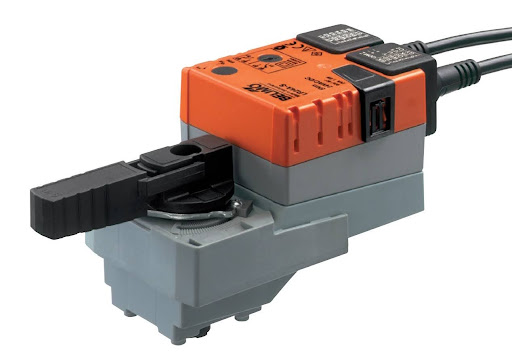
When managing climate control across a commercial building, plant, or healthcare facility, you know every valve, wire, and controller needs to just work. But if you’re a building services engineer, HVAC tech, or facility manager in South Australia, chances are you’ve dealt with unreliable airflow, sluggish valve response, or unclear actuator feedback.
Knowing how a Belimo actuator works is important for precision in a system's performance.
A Belimo actuator uses electric or spring-return motion to precisely open, close, or modulate valves, regulating the flow of air or fluid in your HVAC system automatically. It's the core muscle behind automation, safety, and energy control.
And when you know what’s happening inside the actuator, Hutt.
What Does a Belimo Actuator Actually Do?
In simple terms, a Belimo actuator is a device that moves a valve to control the flow of air or water in an HVAC system. It turns electrical signals from your building automation system (BAS) into mechanical motion, opening or closing valves to modulate flow based on temperature, pressure, or occupancy demand.
If your system decides it’s too hot inside and calls for chilled water, the actuator is what physically moves the valve so chilled water can flow through.
That’s the basic function. But Belimo actuators are far from basic in design.
How Does a Belimo Actuator Work in HVAC?
Here’s a simplified breakdown of how these high-performance valve actuators operate:
- Signal Input: Your controller sends an electrical input (usually 0–10V or 4–20mA).
- Motor Drive: The actuator's internal motor receives the signal and rotates (rotary actuator) or pushes/pulls (linear actuator) the valve.
- Valve Movement: The movement controls the angle of ball, butterfly, or globe valves ,adjusting the position to allow more or less flow.
- Position Feedback: Smart Belimo actuators offer feedback on valve position, torque output, and even energy flow. This data loops back to your controller to fine-tune performance.
One standout Belimo feature is its fail-safe function. If there’s a power loss, spring-return or battery backup models automatically return the valve to a safe position ,reducing the risk of overheating, flooding, or system failure.
And for projects chasing sustainability ratings? Belimo’s energy valves combine an actuator, flow sensor, temperature sensors, and logic control to measure, monitor, and modulate energy usage at the coil level. These can help reduce commissioning times and optimise energy use without adding more BAS complexity.
Key Features and Benefits of Belimo Actuators
What sets Belimo apart is the engineering behind every actuator. Here’s a breakdown of the features HVAC technicians, facility managers, and controls engineers actually care about:
1. High-Torque Rotary Actuators for Demanding Jobs
Belimo rotary actuators deliver torque ranges from 2 Nm to 40 Nm across their standard series, and up to 160 Nm in specialised models, ideal for ball, butterfly, or globe valves up to DN300. Whether you're controlling chilled water loops or high-flow AHU dampers, these actuators are built to move heavy valve bodies without stalling.
2. Fail-Safe Models That Respond Instantly to Power Loss
Many Belimo models include spring-return or supercapacitor-based fail-safe mechanisms that drive the actuator back to a safe default position in the event of power failure. This is critical in emergency shutdown scenarios — especially for heating, cooling, or fire isolation systems.
Example: Some Belimo series of actuators include spring return functionality with a running time of just 75 seconds (90° rotation).
3. Modulating Control with Precision Positioning
Belimo actuators offer full modulating control (0–10 VDC / 2–10 VDC or 4–20 mA) for precise flow regulation. This ensures smooth part-load performance in VAV, FCU, or chilled beam systems, preventing the wear-and-tear common with two-position (on/off) valves.
Some models even feature position feedback (DC 2–10 V) for real-time valve diagnostics and flow tuning
4. Energy Valves with Built-In Logic & Sensors
Belimo’s Energy Valve is a game-changer for hydronic systems. It combines a pressure-independent valve, actuator, and sensors to manage and optimise coil performance. It tracks ΔT (temperature differential), flow rate (l/min), and energy consumption (kWh) which are all visible through Belimo Cloud or BACnet/IP. These valves can even self-balance in real-time based on coil load.
5. Weatherproof IP66/IP67 Enclosures
Select Belimo actuators come rated to IP66 or IP67, meaning they’re fully protected against dust, high-pressure water jets, and even temporary submersion. Ideal for outdoor installs on rooftop plants, exposed pipework, or coastal environments.
6. Native BMS Compatibility
Belimo actuators are plug-and-play with major building management systems via BACnet, Modbus RTU, Modbus TCP/IP, and Belimo’s proprietary MP-Bus. That means faster commissioning and less hassle integrating third-party controls.
7. Maintenance-Free by Design
All Belimo actuators feature brushless DC motors, sealed gearboxes, and overload protection, meaning no recalibration, zero lubrication, and no gearstrip from over-torque. This dramatically reduces service calls and long-term running costs.
8. Built-In Manual Override
Most models include a manual override lever or hex key drive for emergency operation or commissioning. This feature is often critical during staged handovers or mechanical testing when power is not yet live.
Frequently Asked Questions
How does a Belimo energy valve work?
A Belimo energy valve combines a standard actuator with sensors for temperature, pressure, and flow. It regulates energy delivery by measuring delta T (temperature difference across the coil) and modulating valve position accordingly. This ensures efficient heating or cooling with no over-pumping.
How to tell if a Belimo actuator is open?
Most Belimo actuators have a visual indicator on the housing that shows the current valve position. On digital models, you can also check the status via your BAS or through Belimo’s diagnostic tools (like the Belimo Assistant App using NFC).
What type of valves do Belimo actuators work with?
Belimo actuators are designed to work with ball valves, butterfly valves, globe valves, and pressure-independent control valves. Their rotary actuators are ideal for high-torque applications, while linear models fit globe-style valves in chilled or hot water loops.
Read more
Linear Actuator Uses: Applications in Various Industries
If you're an HVAC technician, BMS integrator, or building engineer having issues with a damper that won’t budge, valves acting up, or maybe you're still stuck adjusting things manually when they should run on their own. These problems usually boil down to one thing: how your system moves. That’s where a linear actuator comes in.
Linear actuators convert energy (from motors, air, or fluid) into straight-line motion. They move dampers, valves, arms, and panels without needing hands-on control. If a system needs to move something forward, backward, up, or down – precisely and repeatedly – it most likely uses a linear actuator.
This article will break down how they work, where they’re used, and why they’re critical in industries like HVAC, industrial automation, healthcare, and building controls.
How Does a Linear Actuator Work?
A linear actuator generates linear motion (movement along a straight line) by converting rotational motion from a motor or hand crank into push/pull force. It works with a lead screw or ball screw system inside.
Here's the basic process for electric actuators:
- A DC or AC motor turns a threaded rod (the lead screw).
- A nut or carriage attached to the screw moves linearly as it turns.
- This nut connects to the primary rod shaft, which extends or retracts with control.
In electric linear actuators, that motion is digitally controlled, perfect for tasks needing precise positioning, smooth operation, and tight tolerances. They’re widely used in building automation, medical equipment, robotics, and more.
Linear actuators are essential in systems where motion must be accurate and repeatable, like robotic surgical tools and solar panel tracking systems.
What Can Actuators Be Used For?
Actuators are everywhere once you start noticing. Let’s run through some real-world linear actuator uses examples:
- HVAC Systems: To control air dampers and water valves in chilled/hot water loops. Without actuators, your BMS can’t regulate temperature efficiently.
- Industrial Automation: Used in robotic arms, conveyors, and packaging machines to control movement accurately and safely.
- Medical Devices: These include hospital beds, dental chairs, and imaging equipment, all using linear actuators for fine adjustments.
- Automotive Manufacturing: Used for automated welding, stamping, and even within the car (adjustable seats and trunk lifts).
- Solar Tracking Systems: They move panels to follow the sun using micro linear actuators for energy optimisation.
Bottom line: If there’s a need to move something in a straight line with precision, actuators are probably involved.
Read More: What Are The Different Types of Actuators and Their Applications
Types of Linear Actuators
Not all actuators are the same. Let’s look at the five main types of linear actuators used in HVAC, industrial automation, and beyond.
Electric Linear Actuator
This is the most common in HVAC applications. An electric linear actuator uses an electric motor (AC or DC) to drive a lead screw, converting rotational motion into straight-line movement. Ideal for precise control with minimal maintenance.
- Best for: HVAC valves, robotics, and medical devices
- Power source: Electricity
- Use case: Honeywell or Siemens valve control systems
Hydraulic Actuator
These use pressurised incompressible hydraulic fluid to move a piston inside a cylinder. They offer high force output, great for heavy-duty industrial applications.
- Best for: High-force applications like presses or lifting machinery
- Power source: Hydraulic systems
- Key trait: High torque and strength, but more maintenance-heavy
Pneumatic Actuator
These run on compressed air, offering fast movement but less precise control compared to electric actuators. They're cost-effective and often used where speed matters more than pinpoint accuracy.
- Best for: HVAC dampers, safety shut-offs, light-load applications
- Power source: Compressed air
- Popular in: Cleanrooms and food manufacturing
Mechanical Linear Actuator
This includes devices like rack-and-pinion systems, lead screw drives, and belt drives that convert rotary to linear motion through mechanical means alone.
- Best for: Manual or semi-automated systems
- Power source: Manual or mechanical motor drive
- Often found in: Low-budget or low-power systems
Piezoelectric Actuator
The most precise of the bunch. These use piezoelectric materials that expand or contract with voltage, generating ultra-fine linear motion.
- Best for: Precision instruments, optics, nano-tech
- Power source: Electricity
Used in: High-end lab or imaging devices
Frequently Asked Questions
What is the primary purpose of an actuator?
The main job of an actuator is to convert energy into motion, specifically, to move or control a mechanism like a valve or damper. In HVAC, it's the bridge between electronic control signals and mechanical action.
What are the uses of linear motion in our daily life?
Linear motion is everywhere: electric recliners, printers, automatic windows, and even adjustable hospital beds. In HVAC, linear actuators open or close dampers, regulate valve positions, and help maintain building comfort.
What are the applications of linear and rotary actuators?
Linear actuators are used where movement in a straight line is needed, like opening valves or pushing something along a track. Rotary actuators, on the other hand, provide rotational motion and are used in applications like turning wheels, rotating antennae, or swivelling robotic joints.
How do electric linear actuators play a role in precise control?
Electric linear actuators are known for precise positioning and repeatability. Because they use motors and encoders, they’re perfect for tasks that need controlled, consistent movement, ideal for automation and building management systems.
Why choose electric actuators over pneumatic or hydraulic?
Electric actuators offer low maintenance, clean operation, and better precision. Pneumatic actuators may be cheaper upfront but need ongoing compressed air supply. Hydraulic actuators offer power but come with leakage and servicing issues. Electric systems are more efficient for HVAC and automation.
So, Which Actuator Is Right for You?
If your HVAC system needs precise, reliable valve control, electric linear actuators are your best bet. But if your project requires high force or speed, or you're working in a highly automated industrial environment, other types might be a better fit.
Still unsure which actuator suits your needs?
Check out our catalogue at Controls Traders. We've got over 40 years of combined experience in HVAC controls and industrial automation, which has helped us stock the best. Our team can also help you pick the right actuator, whether you're looking for Honeywell, Johnson Controls, Belimo, Siemens, Schneider Electric, or other trusted global brands.
You can shop by brand, shop by product, send us a message or call us at 1300 740 140 for enquiries.
Read more
What Does a Valve Actuator Do? A Guide for HVAC and Industrial Applications
.jpg)
You’re probably responsible for keeping building systems running, whether it’s a multi-storey HVAC network, a water treatment plant, or a site with strict automation requirements. And when something as small as a valve actuator fails, everything downstream grinds to a halt.
So, what does a valve actuator do? It's a mechanical or electromechanical component that moves a valve: opening, closing, or adjusting it automatically to control the flow of liquid or gas. Whether powered by air, electricity, or hydraulic pressure, valve actuators enable hands-free, precise flow control in modern systems.
For South Australian HVAC professionals, control engineers, and facilities managers, understanding actuator valves is essential to preventing downtime and keeping your systems safe, efficient, and responsive.
Why Do We Use Actuators?
In a nutshell: we use valve actuators to automate the movement of a valve (either opening, closing, or modulating it) without manual effort. But that’s just scratching the surface.
A valve actuator’s purpose is to control the movement of a valve’s internal components to start, stop, or regulate the flow of gas or liquid in a system. Without it, automated control of HVAC, water, or fuel systems just isn’t possible.
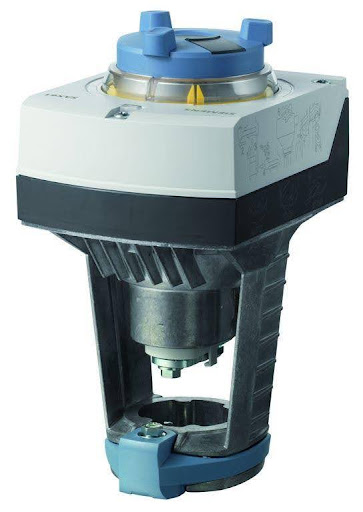
Let's say you have a commercial air conditioning system in an Adelaide office building. You don’t want someone climbing into the ceiling to twist a valve every time the temperature changes.
Instead, an actuator receives a signal from the building’s control system and adjusts the airflow instantly, whether it comes from a programmable logic controller (PLC), building management system (BMS), or local thermostat.
How Does a Valve Actuator Work?
A valve actuator works by converting a control signal, usually electric, pneumatic (compressed air), or hydraulic pressure, into mechanical movement. This movement turns or lifts the valve stem, opening or closing the valve.
There are two core motion types:
- Rotary Motion (quarter-turn or multi-turn): Used in ball valves and butterfly valves
- Linear Motion: Used in globe valves or diaphragm valves
The actuator receives input from a control system and applies force to adjust valve position. Some actuators include a feedback loop so the system knows the exact valve position at all times, key for precise control in HVAC, fluid power, and industrial settings.
What Are the Main Purposes of an Actuator?
In industrial, HVAC, and building automation settings, here’s what an actuator enables:
1. Automation
Valve actuators allow remote or programmatic control of valve positions via a control system (e.g. BMS or DDC controller). That means no need to operate the valve on-site physically.
In an HVAC system serving a multi-storey commercial building, you might have zone control valves for chilled water distribution. A Belimo electric actuator connected to the BMS can:
- Modulate valve position between 0% and 100% based on real-time temperature data.
- Respond instantly to occupancy sensors or time-of-day programming.
- Improve building energy rating by keeping cooling/heating tightly controlled per room or zone.
Common actuator types include electric (modulating or 2-position) and Pneumatic (for legacy or high-speed systems).
2. Safety
Valve actuators allow instant shut-off or redirection of fluid/gas flow during emergencies, without relying on human intervention. This is especially vital in systems handling high-pressure steam, toxic gases, or flammable fluids.
Use Case:
Let’s say you’re managing a boiler room or chilled water plant. In the event of a power failure or fire:
- A spring-return actuator can automatically return the valve to a safe default position (e.g. fully closed),
- Emergency stop buttons on-site or via BMS can trigger a total system shutdown across multiple valve points.
Example: A Johnson Controls VA-7150 actuator paired with a globe valve in a hot water loop. When the fire alarm is triggered, it automatically closes to prevent overheating or pressure spikes.
3. Efficiency
In large HVAC or water systems, energy efficiency comes down to flow control. Valve actuators are also used for optimising energy use with flow precision. The actuator’s role is to regulate flow exactly as needed, avoiding over-pumping, pressure imbalances, or thermal drift.
Modulating actuators receive continuous feedback (via 0–10V or 4–20mA signals) and adjust the valve position accordingly.
This ensures variable flow based on demand, not a static open/close state.
Energy Savings Example:
In a commercial air handling unit (AHU), equipping your chilled water valve with an electric actuator can:
- Save up to 15–30% energy, based on system size and load variability.
- Extend equipment life by reducing pump strain and short-cycling.
Bonus: Many high-end actuators integrate BACnet or Modbus for direct communication with smart controllers, helping to streamline setup and ongoing optimisation.
4. Consistency
Manual valves are subject to operator error, wear, and variation. But a high-quality actuator ensures that:
- Valve strokes are precise. You’ll get the same response every time.
- Performance doesn’t degrade with frequent use, especially when maintained.
Some facilities in high-demand zones may run cooling towers or process loops 24/7. A Siemens GCA actuator installed on a 2-way valve can:
- Operate over 100,000 full cycles in its lifetime without calibration loss.
Deliver ±1% positioning accuracy for tight fluid control, which is ideal for pharmaceutical labs, hospitals, or clean rooms.
Frequently Asked Questions
What is the function of the actuator in a valve?
The actuator moves the valve stem to open or close the valve, controlling the flow of a liquid or gas through a system. It responds to signals from control systems to ensure precise and repeatable operations.
How do I know if my valve actuator is bad?
Look for inconsistent valve movement, loss of pressure (in pneumatic systems), strange noises, or slow response times. If a control valve actuator isn’t reacting properly, it may need recalibration or replacement.
Are electric actuators better than pneumatic?
It depends. Electric actuators provide quiet and accurate control, particularly for indoor systems. Pneumatic actuators are more durable in extreme environments and are generally cheaper to maintain where compressed air is available.
Can I replace just the actuator and keep the valve?
In many cases, yes, especially if the valve body is in good shape. Make sure the replacement actuator is compatible in terms of torque, motion type, and mounting interface.
What happens if an actuator fails?
Depending on the system design, a failed actuator could leave a valve stuck open or closed. In critical systems, this can halt operations or trigger emergency shutdowns. Spring-return actuators are often used to return to a safe state in the event of failure. Shop a replacement valve actuator here.
Want Help Choosing the Right Actuator?
Need help retrofitting your HVAC system or matching an actuator to your valve? Control Traders supplies Honeywell, Belimo, Danfoss, Siemens, Schneider Electric, Johnson Controls, and more, with stock on hand and fast delivery across South Australia. Shop by brand or browse actuator valves by product name.
Do you prefer to talk it through? Our team has 40+ years of in-house experience in HVAC instruments. Call 1300 740 140 or send a message. Let's help you spec it right the first time.
Read more